

What Your ED Medicine Leaflet Is Really Telling You ?
Written By - Cade Harrington
on August 1, 2026
What Your ED Medicine Leaflet Is Really Telling You ?
If you’re anything like most people, you open your medicine box, unfold the leaflet, see what looks like a tiny paper novel written in font size ant, and immediately think, “Right, absolutely not.” That’s understandable. But when it comes to an ED Medicine Leaflet, skipping the fine print can mean missing the details that actually matter most to you: what the tablet is for, when not to take it, what can interfere with it, what side effects need urgent help, and what seemingly innocent habits — like heavy drinking or grapefruit juice — can complicate things. The leaflet is not there to scare you or bury you in chemistry homework. It is there to help you use the medicine safely and confidently. Whether you’re reading information for sildenafil, tadalafil, or another ED treatment, the leaflet usually follows a pattern: what the medicine does, who should avoid it, how to take it, what might interact with it, what side effects to watch for, and what to do if something goes sideways. That structure is more useful than it looks. Once you know how to read it, the leaflet stops sounding like legal wallpaper and starts sounding like practical advice. And that matters, because some common warnings — especially around nitrates, alpha-blockers, heart conditions, prolonged erections, and dose timing — are not optional footnotes. They are the bits that protect you from turning a treatment plan into a very avoidable problem.
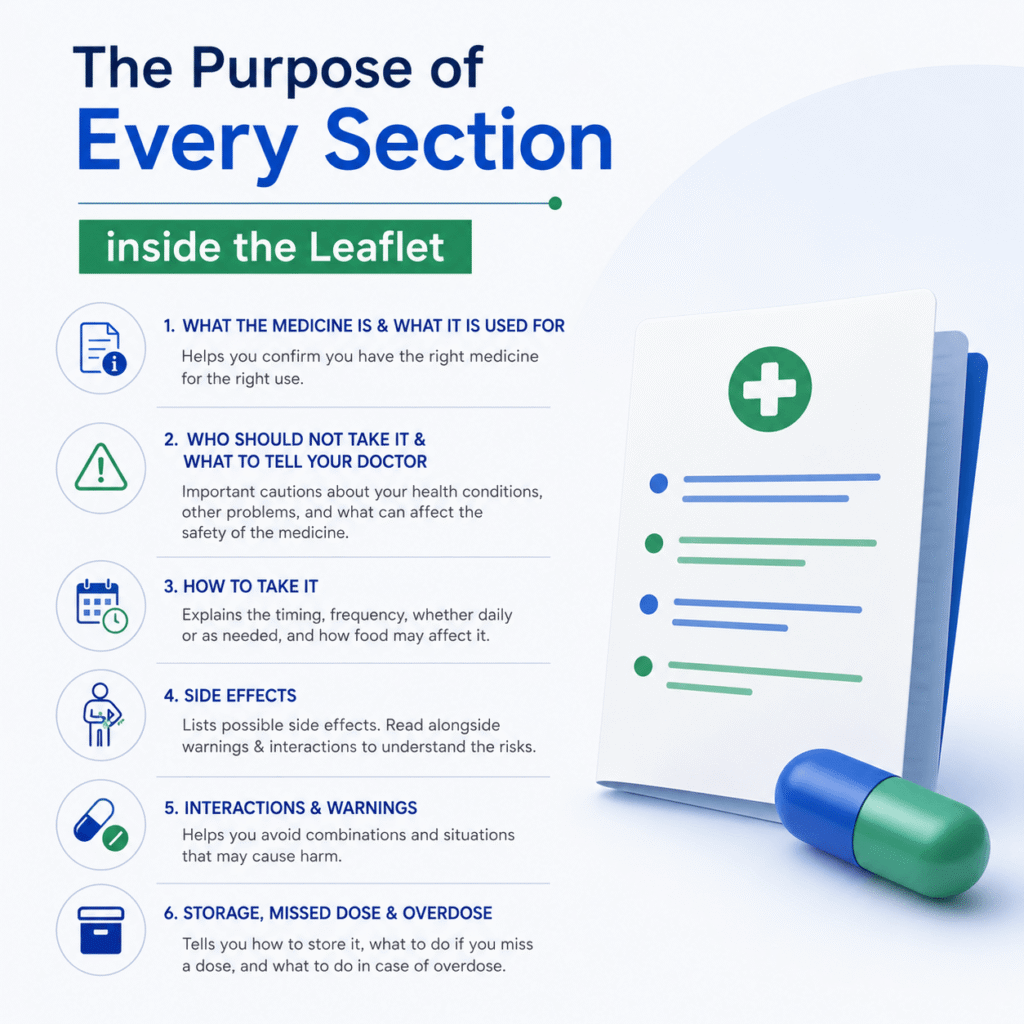
The Purpose of Every Section inside the Leaflet
The first useful thing to know about an ED Medicine Leaflet is that every section has a job. It is not random, and it is not there just to keep regulatory people happy on a Tuesday afternoon. The opening section usually tells you what the medicine is and what it is used for, which sounds basic, but it helps you confirm that you are reading the right leaflet for the right use. That matters because some medicines containing the same active ingredient can be used differently depending on the condition being treated. Then comes the part most people should read twice: who should not take it and what to tell your healthcare provider before use. This is where you’ll find important cautions about heart problems, low blood pressure, recent stroke or heart attack, vision problems, kidney or liver issues, blood disorders, and other conditions that can change whether the medicine is appropriate for you. Once this is done “how to take it “is the section which explains the timing and frequency, even if it is taken daily or as per the need and how is the food going to affect. The side effects section is often the one people flip to first, but it works best when read alongside the interaction and warning sections, because the leaflet is trying to help you connect the dots. Finally, storage, missed-dose advice, and overdose instructions tell you what to do in real life, not just in theory. In other words, the leaflet is less like a disclaimer and more like a user manual for safe, sensible treatment. Once you read it that way, it becomes a lot more useful and a lot less intimidating.
Drug Interactions Hidden in Plain Sight
This is the section where your ED Medicine Leaflet quietly turns into a detective novel. The biggest plot twist is that the most dangerous interaction is not always some rare medicine with a name you can’t pronounce. Sometimes it is something you’ve heard of before and assumed was no big deal. Leaflets for sildenafil and tadalafil commonly warn against using nitrates, including medicines for chest pain such as nitroglycerin or isosorbide, because combining them can cause a sudden and unsafe drop in blood pressure. The same warning extends to so-called “poppers,” which contain nitrate compounds and are not safe to mix with these medicines. There are alpha-blockers, often used for prostate symptoms or high blood pressure. These are not always completely forbidden, but they can still cause dizziness, fainting, or blood pressure problems in some people when taken together, which is why your pharmacist may ask what else is in your medicine cabinet before saying yes or no. Antibiotics, antifungals, HIV medicines, herbal products like St. John’s wort, and even some over-the-counter medications can show up in the interaction section too. That is exactly why “I only take one or two other things” is not the reassuring statement people think it is. If your leaflet lists interaction risks, it is not being dramatic. It is being practical. This is also why you should bring a full medication list — not a heroic memory test — when you speak to a pharmacist
Food, Alcohol, and Lifestyle Advice You Might Miss
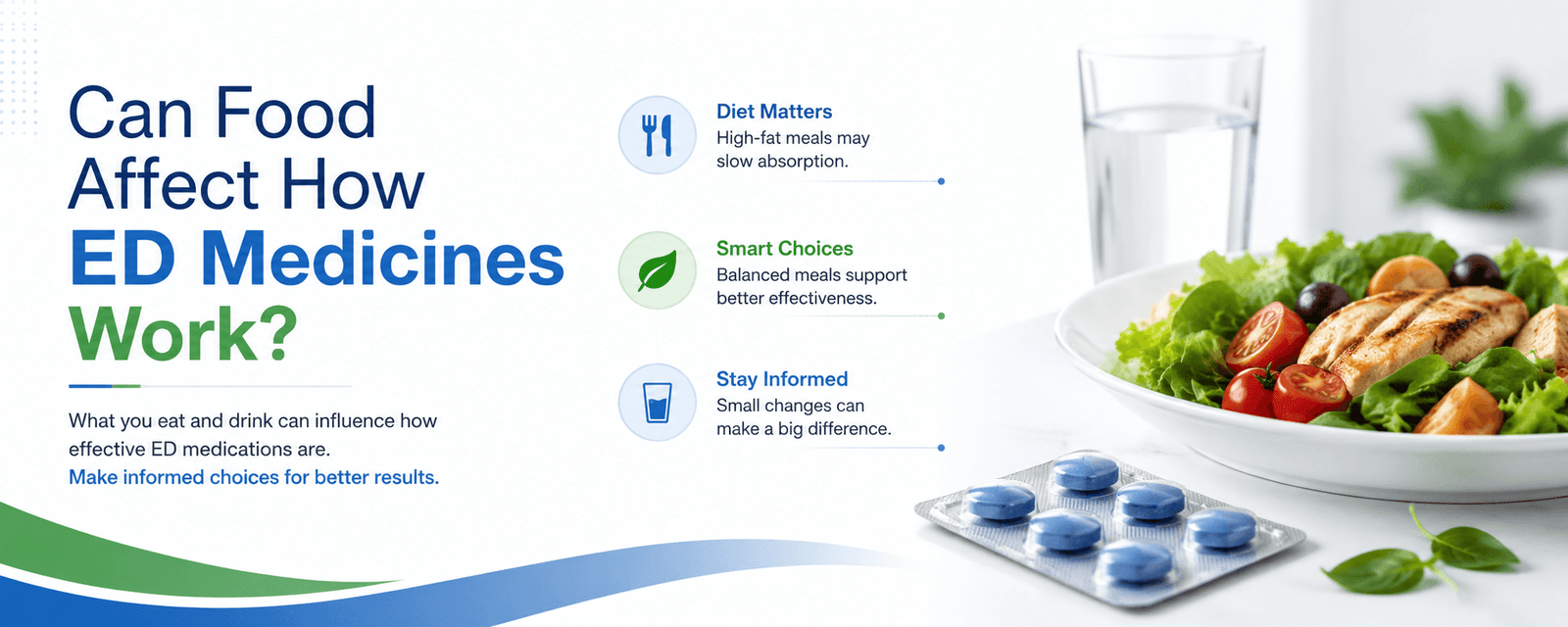
Many readers assume the leaflet is mostly about the tablet itself, but some of the smartest advice in an ED Medicine Leaflet is about everything happening around the tablet. Food, drink, timing, and lifestyle can all shape how well a medicine works and how you feel after taking it. For example, sildenafil patient information notes that it can be taken with or without food, but a high-fat meal may make it take a little longer to start working. That means your romantic timing may be perfect while your cheeseburger timing is not. Alcohol is another easily ignored detail. The NHS notes that you can drink alcohol with sildenafil, but drinking a lot can make it harder to get an erection in the first place, which rather defeats the point. For tadalafil, both the NHS and MedlinePlus warn that heavier alcohol use can increase the risk of dizziness, light-headedness, faster heartbeat, and low blood pressure. Grapefruit is also worth paying attention to, because leaflets and medicine references commonly advise discussing or avoiding grapefruit or grapefruit juice with certain ED medicines due to the potential effect on how the drug is processed. Then there is the lifestyle advice that doesn’t feel exciting enough to make headlines but matters anyway: smoking, excess alcohol, stress, inactivity, poor sleep, and unmanaged health conditions can all work against treatment goals. In other words, your leaflet is not just telling you how to swallow a tablet. It is gently telling you not to sabotage it with dinner, drinks, or habits that make the medicine’s job harder than it needs to be
What happens when you miss a dose or even take too much?
This is the section most people read only after they wish they had read it earlier. The tricky part is that missed-dose advice depends on whether your ED treatment is taken daily or only when needed. With tadalafil, for example, the NHS says that if you take it every day and forget a dose, you should take it when you remember unless it is nearly time for the next one. In that case, skip the forgotten dose and go back to your usual schedule. For as-needed medicines, the idea of a “missed dose” is a little different because there may not be a fixed daily schedule at all, which is why your own leaflet matters more than general internet folklore. Overdose instructions are even more important. Patient information for Viagra says that if you accidentally take too much, you should call your doctor or go to the nearest emergency room right away. MedlinePlus also advises calling poison control, and calling emergency services immediately if the person collapses, has trouble breathing, has a seizure, or cannot be awakened. The leaflet will also tell you when side effects stop being “monitor it and see” territory and become “please get help now” territory. Chest pain during sex, sudden vision or hearing changes, fainting, severe dizziness, shortness of breath, or an erection lasting more than four hours are not moments for optimism or home remedies. They are the exact reason those warnings are printed so clearly in the leaflet
Special Instructions for Older Adults and Health Conditions
This is where the ED Medicine Leaflet becomes especially valuable, because age and underlying health conditions can change how safely a medicine fits into your life. If you are older, or if you have heart, kidney, liver, blood pressure, eye, or blood-related conditions, the leaflet is often trying to tell you one simple thing: this is not a one-size-fits-all decision. Pfizer’s patient information advises people to tell their healthcare provider about heart problems, recent heart surgery, stroke history, low or uncontrolled high blood pressure, kidney problems, liver problems, previous prolonged erections, blood cell conditions such as sickle cell anaemia or leukaemia, stomach ulcers, and certain eye disorders before taking sildenafil. The NHS similarly lists recent heart attack or stroke, low blood pressure, uncontrolled high blood pressure, liver or kidney problems, certain blood conditions, and previous vision loss as reasons tadalafil may not be suitable for everyone. Older adults are not automatically excluded from ED treatment, but the practical message is that other medicines, slower drug clearance, and a higher chance of blood pressure-related side effects can make professional review more important, not less. This is also the section that reminds you to tell emergency clinicians when you last took sildenafil if you need urgent care for a heart problem. That one detail can matter enormously in a real-world emergency. So, if you skim everything else, don’t skim this. The leaflet is not trying to label you “complicated.” It is trying to keep your treatment appropriate to your body, not somebody else’s
Questions to Ask Your Pharmacist After Reading the Leaflet
If you finish your ED Medicine Leaflet with more questions than answers, that does not mean you failed some kind of pharmacy exam. It means you are reading it properly. The smartest next step is to ask a pharmacist practical questions that connect the leaflet to your actual routine. Ask whether the medicine is meant for daily use or only when needed. Ask how long before sex you should usually take it, and whether food could delay the effect. Ask whether your blood pressure medicine, prostate medicine, antifungal, antibiotic, or supplement changes the safety picture. Ask if alcohol is okay in moderate amounts or if it is likely to make dizziness worse. Ask what symptoms mean “stop and seek urgent help” rather than “give it time.” Ask whether you should avoid grapefruit, recreational drugs, or taking another ED tablet too soon. If you have diabetes, heart disease, kidney disease, liver disease, or you are older and taking multiple prescriptions, ask whether your dose or medicine choice needs more careful review. You can also ask the very human questions people often avoid out of embarrassment: what if it doesn’t work the first time, what if side effects bother me, and what if I’m not sure this is the right option for me? That is not oversharing. That is sensible medicine use. A leaflet gives you the roadmap, but the pharmacist helps you figure out which turns actually apply to your journey. That combination — reading first, asking second — is one of the safest and smartest habits you can build around ED treatment
Final Thoughts
Your ED Medicine Leaflet is not trying to ruin the mood. It is trying to keep you safe, help the medicine work properly, and flag the issues most likely to cause trouble if you overlook them. Read it once for the basics, then read it again for the details you almost missed. If anything in it feels unclear, especially around interactions, timing, alcohol, other medicines, or health conditions, ask your pharmacist before you guess. Guesswork is charming in board games. It is less charming in medicine.
FAQ: ED Medicine Leaflet Questions People Commonly Ask
Why on earth is the paper so long?
It really does feel like trying to read a full-length novel just to take a single pill! The main reason it’s so huge is that the manufacturers have to cover every possible base. It isn’t just about listing side effects—it’s explaining who should completely avoid the pill, how to store it so it doesn’t lose strength, and what emergency red flags to watch for. It looks overwhelming, but most of it is just thorough safety backup.
Do generic versions come with one, too?
They sure do. Even if you aren’t buying the big brand-name drug, generic versions are required to give you the exact same rundown. The design or phrasing might look a little different, but the core safety rules, dosage details, and active ingredient warnings are identical.
Can I just toss the paper if I’ve taken these before?
Formulations change, dosages get adjusted, and your own body changes over time. A medication you took a year ago might interact differently with a new prescription or supplement you started recently. Taking thirty seconds to double-check is always worth the peace of mind.
What’s the single biggest warning on that page?
The absolute biggest heads-up is about nitrates—which are common in heart medications for chest pain—and drugs like riociguat. Mixing ED pills with these can cause your blood pressure to drop to dangerous, life-threatening levels.
Why do they always ruin the mood by bringing up alcohol?
Because alcohol and ED meds tend to clash in a couple of ways. First, booze can worsen side effects like light-headedness, headaches, and low blood pressure. Second, heavy drinking actually makes it harder to get and keep an erection in the first place, which basically defeats the whole point of taking the pill!
What’s with the weird warning about grapefruit?
It sounds like a quirky myth, but grapefruit juice actually blocks the enzymes your liver uses to break down certain medications. If those enzymes are blocked, the drug can build up in your bloodstream way higher than intended, making side effects much stronger and more unpredictable.
What to do when you accidentally take too much of the medication?
You need to quick look at the leaflet on the emergency section and call your local help line or your doctor. If you notice severe symptoms like chest tightness, dizziness, trouble breathing, or an erection that won’t go away after four hours, head to urgent care immediately.
What happens if I forget a dose?
It depends on how you take it:
As-needed pills: There’s no such thing as a missed dose—you simply take one shortly before you plan to be intimate.
Daily pills: If you take a daily low dose, check your specific leaflet. It usually tells you to take it as soon as you remember, unless it’s almost time for your next scheduled pill. Never double up to make up for a missed one.
Do older guys need to pay closer attention?
It isn’t really about age itself; it’s about what comes with it. As we get older, we’re more likely to manage underlying health conditions or take other daily medications. That higher potential for unexpected drug interactions is why a careful read is so important.
What should I ask my pharmacist?
Be totally transparent with them. Tell them about every single prescription, over-the-counter pill, vitamin, or herbal supplement you take. Mention any past issues with your heart, liver, kidneys, or blood pressure. The clearer picture your pharmacist has, the better they can guide you!
More Blogs