

Morning Erections & What They Reveal About Your Health
Written By - Cade Harrington
on February 26, 2026

Morning Erections & What They Reveal About Your Health
Let’s talk about something your body does almost every night — something most men notice, briefly wonder about, and then proceed to completely ignore. Morning erections. Yep, we’re going there, and we’re doing it properly, because honestly? This is one of the most underrated health conversations you could be having with yourself right now.
Here’s the thing about morning erections that most people don’t realize: they’re not just a random physiological quirk or an accidental side effect of a vivid dream. They are, in the most literal sense of the phrase, your body giving you a daily health report. A consistent, reliable morning erection is your cardiovascular system, your hormones, and your nervous system all sending you a quiet thumbs-up at the same time. And when that morning signal starts showing up less frequently — or disappears altogether — it’s your body starting to send a very different kind of message.
This guide is going to walk you through all of it — the science, the warning signs, a quick self-assessment you can do right now, the heart health connection that cardiologists genuinely want more men to know about, and the lifestyle and medical options that can get things back on track. No judgment, no embarrassment, and absolutely no medical jargon you need a PhD to decode. Just honest, useful, human information that could make a real difference to your health. Ready? Let’s start from the beginning.
The Science Behind Morning Erections — What’s Actually Happening Down There
Nocturnal Penile Tumescence: Your Body’s Built-In Health Check
The medical term for morning erections is Nocturnal Penile Tumescence (NPT) — which sounds incredibly serious, but all it really means is that your body is doing something pretty remarkable while you sleep. Here’s the surprisingly elegant science behind it.
Every night, as you cycle through the different stages of sleep, your brain enters something called REM sleep (Rapid Eye Movement sleep) — the deep, dreamy phase where your brain is most active, processing memories and regulating hormones. During each REM cycle, your brain essentially reboots its nervous system activity. A key part of this reboot involves the parasympathetic nervous system sending signals that cause the smooth muscles in the walls of your penile arteries to relax. When those muscles relax, blood flows in more freely, and — there it is — an erection.
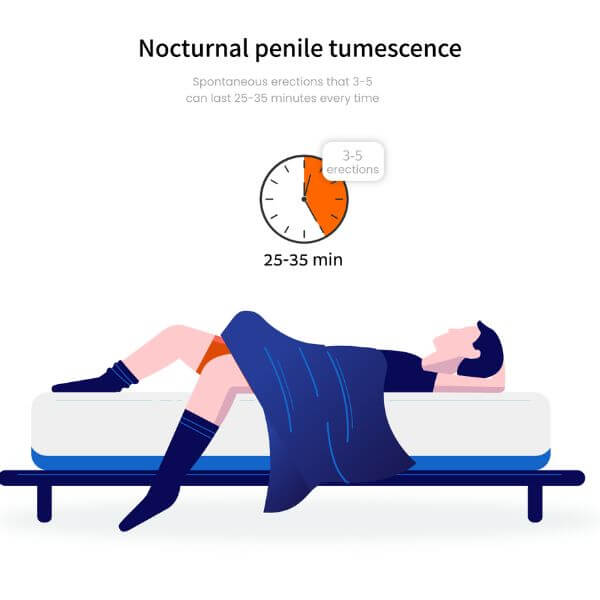
Here’s what makes this genuinely remarkable: this has nothing to do with sexual arousal. Your brain isn’t dreaming about anything provocative. This is purely physiological — your body running a functional test on some of its most important systems. On an average night, you experience three to five of these nocturnal erections, each lasting roughly 25 to 35 minutes. By the time your alarm goes off in the morning, you’re often at the tail end of a REM cycle — which is why you wake up and notice the result.
Think of it as your body running a nightly systems diagnostic — checking that the blood vessels are open and responsive, that the nerves are communicating properly, that hormone levels are where they need to be, and that everything is structurally ready to function. The Cleveland Clinic is quite clear on this: morning erections are “linked to sexual health” and a meaningful indicator of overall physiological well being.
For a morning erection to happen reliably, three things need to be working well together:
Healthy nerve function — the signals from your brain need to travel clearly and efficiently
Good blood flow — your cardiovascular system needs to deliver adequate blood to penile tissue
Balanced hormones — particularly testosterone, which supports the entire sexual response system
When all three are operating well, morning erections happen consistently. When one or more starts to falter, you start to notice changes. And those changes, it turns out, are worth paying close attention to.
When Morning Erections Stop — Your Body’s Way of Waving a Flag
The Signals You Shouldn’t Scroll Past
Here’s something that often surprises people: the occasional absence of a morning erection is completely normal. Stress, poor sleep one night, or a late meal can all temporarily disrupt the pattern. What you’re looking for is a consistent change — a pattern of absence that stretches across days, weeks, or months. That’s when your body is trying to tell you something worth hearing.
So, what are the most common reasons morning erections start to fade? Let’s walk through the main ones clearly and honestly.
1. Stress Overload
Chronic stress is one of the most common problems as it operates a very specific hormonal mechanism. When you endure stress, your adrenal glands pump out cortisol that is your body’s primary stress hormone. The problem is that cortisol and testosterone are biochemical competitors. Research from the University of Texas confirmed that elevated cortisol levels actively suppress testosterone production and block its physiological effects, which directly impacts the reliability of morning erections.
2. Low Testosterone — The Hormonal Slowdown
Testosterone plays a foundational role in driving and sustaining morning erections, and its levels naturally begin to decline from your mid-30s onward — typically at a rate of about 1-2% per year. But lifestyle factors (obesity, sedentary behavior, chronic stress, poor sleep) can dramatically accelerate this decline. Low testosterone doesn’t just affect morning erections; you’ll also typically notice lower energy, reduced motivation, mood changes, and decreased libido alongside it.
3. Poor Sleep Quality — You Can’t Get the Benefit Without the REM
Here’s a direct connection that often gets overlooked: morning erections happen during REM sleep. If you’re not getting adequate deep sleep — whether from insomnia, sleep apnea, irregular sleep schedules, or just consistently not getting enough hours — your body isn’t completing enough REM cycles to trigger the normal NPT process. Johns Hopkins research has directly linked sleep disorders to both testosterone deficiency and erectile dysfunction, confirming this isn’t just theory.
4. Vascular Issues — The Cardiovascular Early Warning
Your penile arteries are narrow — significantly narrower than your coronary arteries. This means that reduced blood flow shows up as an erectile issue long before it manifests as chest pain or other obvious cardiovascular symptoms. Conditions like early-stage hypertension, high cholesterol, early arteriosclerosis, or diabetes can all silently reduce the blood flow quality needed to sustain morning erections.
5. Medication Side Effects — The Overlooked Culprit
A surprisingly wide range of medications can suppress morning erections as a side effect, including certain antidepressants (SSRIs in particular), beta-blockers, diuretics, antihistamines, and some hormone medications. If you’ve recently started a new medication and noticed a simultaneous change in your morning erections, that’s a conversation worth having with your doctor or pharmacist.
The 5-Question Self-Assessment — A Quick Morning Check-In with Yourself, How’s Your Body Actually Doing Right Now?
You don’t need a lab coat or a medical degree to start paying attention to your own health signals. Take a couple of minutes right now and honestly answer these five questions. Think of it as your personal morning health report card — no grades, no judgment, just useful self-awareness.
Question 1: What are the energy levels?
Be honest with yourself here. Are you waking up feeling genuinely refreshed and ready for the day — or are you dragging yourself out of bed, caffeinated heavily, and still hitting a wall by 2 PM? Persistent, unexplained fatigue is one of the most consistent early indicators of low testosterone. It’s not just about feeling sleepy; it’s a deep, motivational tiredness that feels different from just needing more sleep.
What you need to note: If your energy is lower consistently for more than few weeks and you cannot attribute that it is an obvious cause to new baby.
Question 2: Is there a change in the waist size?
This is the one which matters the most that people may realize. The fat which is stored around your midsection is called as excess visceral fat. It directly interferes with the testosterone production by the process called aromatization in which testosterone gets converted into estrogen in a fat tissue.
A waist measurement above 40 inches in men is clinically associated with significantly lower testosterone levels and increased cardiovascular risk.
What to note: If your waistline has been slowly creeping up over the past year or two, that’s a meaningful signal — not just aesthetically, but hormonally and metabolically.
Question 3: How’s Your Sleep Quality?
Not just quantity — quality. Are you falling asleep without struggle? Staying asleep through the night? Waking up feeling like sleep actually did something useful? Or are you spending 7 hours in bed but cycling through shallow sleep, waking multiple times, or snoring heavily (a potential sign of sleep apnea, which is directly linked to both low testosterone and reduced morning erections)?
What to note: If your partner has mentioned that you snore loudly or seem to stop breathing during sleep, please take that seriously. Undiagnosed sleep apnea is one of the most common and most treatable causes of reduced morning erections.
Question 4: How’s Your Libido?
This is different from performance — this is about desire. Do you find yourself genuinely interested in sex, looking forward to intimacy, feeling that natural drive? Or has it become more of a vague, distant concept that you haven’t thought about much lately? One of the reliable indicators of declining testosterone is the consistent reduced libido and it feels like a gradual shift rather than a sudden change. What to note: A libido that’s been noticeably quieter for more than a month, especially alongside other signals on this list, is worth bringing up with a healthcare provider.
Question 5: Have There Been Any Medication Changes?
Think back over the last three to six months. Have you started any new prescriptions? Changed dosages? Added over-the-counter supplements or medications that you take regularly? Several commonly prescribed medications — including SSRIs (antidepressants), certain blood pressure medications, antihistamines, and statins in some cases — are known to affect testosterone levels and erectile function as side effects that aren’t always prominently disclosed.
What to note: If a change in your morning erections coincided with starting a new medication, do not stop taking it without talking to your doctor first — but absolutely do bring it up as a conversation point.
Your Score Check: If you answered yes, this is a concern to two or more of these questions, your body is signalling that something deserves closer attention. That’s not a cause for alarm — it’s a call to take action, and the good news is that most of these signals are genuinely addressable.
The connection between heart and hormone:
What Your Morning Erection Is Trying to Tell Your Heart
This is the section that doctors — particularly cardiologists — genuinely wish more men knew about, because it could literally save lives. And we mean that without a single gram of exaggeration.
Here’s the headline: Erectile dysfunction — including the gradual loss of morning erections — often precedes the development of clinically evident heart disease by two to five years. That’s not a scare tactic; it’s one of the most well-documented findings in cardiovascular medicine, confirmed by multiple large-scale studies and now formally recognized by the American College of Cardiology as a risk-enhancing factor for cardiovascular disease.
Why does this connection exist? The answer lies in the size of your blood vessels. The arteries that supply blood to penile tissue are among the smallest in the body — typically just 1-2 millimetres in diameter. Your coronary arteries (the ones supplying your heart) are significantly larger, at around 3-4 millimetres. When atherosclerosis — the gradual buildup of plaque in artery walls — begins to develop, it shows up in the smaller vessels first. This means that reduced erectile function, including changes in morning erections, can appear as an early warning signal for cardiovascular disease before the coronary arteries are significantly affected.
We want to be very clear about something important here: this is empowering information, not scary information. The reason this connection matters so much is that it gives you an early window — years of advance warning — to make lifestyle changes, get proper screening, and address underlying issues before they become serious cardiovascular events. Think of your morning erections as an early-warning system that most men are walking around with but never reading. You’re now reading it.
If you’re in your 40s or 50s and you’ve noticed changes in your morning erections, the most empowering thing you can do is schedule a comprehensive health screening — cholesterol, blood pressure, blood glucose, testosterone levels, and cardiovascular markers. This isn’t pessimistic; it’s proactive. It’s the kind of self-advocacy that keeps you healthy for decades.
Lifestyle Fixes That Restore Natural Morning Erections
Look, we’ve all been there—trying to “tough it out” because we’ve been told that’s what men do. We live in a culture that treats the “grind” like a badge of honour, but let’s be real for a second: there is no trophy for struggling in silence or ignoring what your body is trying to tell you. While focusing on your sleep, what you eat, and how you move is a beautiful foundation for your health, sometimes the body just needs a little bit of a hand. Whether it’s down to your circulation, your hormones, or just the fact that we’re all getting a little older, relying solely on lifestyle changes isn’t always enough to bring back the regular rhythm of Morning Erections. And honestly? That is perfectly okay.
Asking for a bit of medical support isn’t admitting defeat. Think of it like seeing a physical therapist for a knee injury that just won’t quit. You wouldn’t limp around for a decade just to prove you’re “strong” enough to handle the pain; you’d get it fixed so you could get back to your life. Your sexual health deserves that same level of respect.
Working With Your Body, Not Against It
Modern science has actually given us some incredible ways to help the body do what it already wants to do. You’ve probably heard of things like Sildenafil or Tadalafil, but it’s helpful to think of them not as “magic pills,” but as biological facilitators. They don’t just “create” an erection out of nowhere; they simply clear the path. They work by quieting an enzyme that usually tells your blood vessels to tighten up. By keeping those pathways open, they make sure that when you’re naturally relaxed or stimulated, the blood flow needed for Morning Erections can actually get where it needs to go. They essentially turn up the volume on your body’s natural signals, making the whole process feel more reliable and less like a roll of the dice.
Safety matters, of course. These tools are incredibly well-studied, but they aren’t for everyone—especially if you’re managing heart issues or taking nitrates. This is why the “DIY” route with sketchy websites is such a bad idea. You deserve a partner like GenPharmaRx—someone who treats you like a person, not a transaction. We believe in an experience that’s discreet, trustworthy, and supportive. By connecting you with licensed pharmacists and verified medications, we help you reclaim the health of your Morning Erections without the awkwardness of an in-person waiting room or the risk of “grey market” gambles. It’s about meeting you where you are with actual care.
The “Nocturnal Workout”
To really understand why this matters, we have to look at what’s happening while you’re dreaming. Most guys don’t realize that Morning Erections are basically the “grand finale” of a maintenance cycle that runs all night. During REM sleep, your brain flips a switch. The “stress” chemicals that keep you on edge all day take a backseat, and your parasympathetic nervous system—the part of you that heals and repairs—takes the wheel.
This shift triggers these “nocturnal cycles” where your body floods itself with fresh, oxygenated blood. It’s like a nightly workout for your vascular system to keep everything flexible and healthy.
Once the morning erections start to fade your body is supported by the body’s natural rhythm.
When Medical Support Makes Sense — And Where to Find It Discreetly
Let’s be honest: in a world that tells men to “power through” every obstacle, there’s a strange, unspoken pressure to just suck it up when things start to change. We romanticize the grind and the struggle, but let’s be clear: there is no trophy for suffering in silence. While focusing on your sleep, diet, and exercise is a fantastic foundation for your vitality, sometimes the body just needs a bit of a mechanical assist. Whether the root cause is vascular, hormonal, or simply the natural passage of time, relying solely on lifestyle changes isn’t always enough to restore the frequency of Morning Erections or overall function—and that is perfectly okay.
Seeking medical support isn’t an admission of defeat. It’s a rational, self-respecting move, no different than seeing a physical therapist for a persistent knee injury. You wouldn’t limp for a decade just to prove a point; you shouldn’t ignore your sexual health either. Modern science has given us incredibly effective tools like Sildenafil or Tadalafil. These aren’t “magic pills” that create arousal out of thin air; they act as a biological facilitator. They break down the signals keeping the blood vessels relaxed and allow these vessels to stay open and ensure that when natural stimulation occurs the blood flow is necessary for the Morning Erections and sexual activity happens. They essentially turn the volume up on your body’s natural processes, making the physiological response more reliable and consistent.
Safety is, of course, the priority. These are some of the most studied medications in the world, but they aren’t for everyone—especially those using nitrates for chest pain. This is why the “DIY” approach to unverified websites is so risky. You deserve a partner like GenPharmaRx that treats you with dignity. We believe that you need a pharmacy that is trustworthy, discreet and supports your medically. GenPharmarx here helps you to reclaim your confidence and health of your Morning Erections.
The Biological Significance of Nocturnal Cycles
To truly humanize this topic, we have to look at what happens when the lights go out. Most men don’t realize that Morning Erections are actually the final act of a play that has been running all night. During REM sleep, the brain shifts its chemical balance. The “stress” chemicals like norepinephrine dip, and the parasympathetic nervous system—the part of you responsible for healing and relaxation—takes over.
This shift triggers a series of “nocturnal cycles.” In a healthy individual, the body uses these moments to flood tissues with freshly oxygenated blood. It’s essentially a localized workout for the vascular system. When someone experiences a decline in Morning Erections, it’s often the first physical “canary in the coal mine” signalling that blood flow isn’t as efficient as it once was. By addressing this through a combination of lifestyle and, if necessary, medically supervised prescriptions, you aren’t just treating a symptom; you are supporting your body’s natural maintenance protocol.
Moving Beyond the Stigma
The goal of humanizing this discourse is to strip away the clinical coldness. When we talk about the Morning Erections we talk of the quality life. Sexual health is linked to the mental health and confidence, and it strengthens the intimate relationship. When a body of man feels it is no longer responding the way it was before it affects the physical performance.
Breaking the cycle needs courage to learn and acknowledge. Using a service like GenPharmaRx isn’t just about getting a prescription; it’s about taking agency over your own biology. It’s a declaration that your well-being is worth the effort, and that you refuse to let a treatable physiological hurdle define your happiness. Your body has an incredible capacity for resilience—sometimes it just needs a little help to get back on track.
Frequently Asked Questions — Morning Erections & Your Health
Q1: How often should I normally be getting morning erections?
Most men between their 20s and 40s experience morning erections fairly consistently — perhaps 3 to 5 times per week on average. The frequency naturally and gradually decreases with age, which is normal. What you’re looking for is a significant, sustained shift in your baseline pattern — not occasional variation, which is perfectly normal
Q2: Can I tell if my testosterone is low just from my morning erections?
Morning erections are a useful and meaningful indicator of testosterone levels, but they’re not a replacement for an actual blood test. Think of them as a signal that will prompt you to investigate ahead and not the definitive diagnosis. Recurring absence of the morning erections with other symptoms such as reduced libido, mood changes and increase in the body fat is a strong reason to get your testosterone level get tested properly.
Q.3. What happens to the morning erections as you grow older ?
It normal and expected as you grow older to decree the morning erection. Testosterone levels naturally decline from the mid-30s onward, and the physiological systems involved in NPT naturally become somewhat less robust over time. What’s not normal is a sudden or dramatic decrease at any age, or a consistent complete absence in younger men. If you’re under 50 and morning erections have essentially stopped, that’s worth a medical evaluation regardless of age-related expectations.
Q4: Can stress really be enough to stop morning erections entirely?
The testosterone production is elevated due to the cortisol levels because of the chronic sustained stress production. Research published in PMC confirmed that cortisol acts as an antagonist to the normal male sexual response cycle. The good news is that stress-related suppression is among the most reversible causes — meaningful improvements in stress management can restore normal hormonal function within weeks to months.
Q5: My medication changed recently and morning erections stopped. What should I do?
Talk to the prescribing doctor before anything else — don’t stop taking your medication without medical guidance. Many medications that affect erectile function have alternatives that don’t carry the same side effects, or the dose can sometimes be adjusted. Being transparent with your doctor about this side effect is important because it’s a legitimate medical concern that affects your quality of life, and most physicians will take it seriously and work with you to find a better solution.
Q6: If morning erections are an indicator of heart health, should I be worried?
Worried? No. Proactively aware? Absolutely yes. The heart-ED connection gives you valuable advance notice — years of it — to address underlying cardiovascular risk factors through lifestyle changes and appropriate medical screening before a serious event occurs. The men who hear this information and act on it are the ones who benefit most. Schedule a full health screening, have an honest conversation with your doctor, and use the window of time you now know you have.
Q7: Can losing weight actually restore morning erections?
Yes, very significantly in many cases. Excess visceral fat actively converts testosterone to estrogen through the aromatization process, which suppresses the hormonal foundation needed for morning erections. Losing weight through a balanced diet and regular exercise can boost testosterone production by up to 30% according to Harvard Health research. Even moderate weight loss — 10-15% of body weight — can produce meaningful hormonal improvements that show up as restored morning erection frequency.
Q8: Are there foods I should avoid if I want to support morning erections?
Yes. Processed foods high in trans fats restrict blood vessel function. Excessive alcohol suppresses testosterone production and disrupts sleep quality (and therefore REM cycles). High-sugar diets contribute to insulin resistance and visceral fat accumulation. Heavily processed soy products in large amounts may have mild estrogen-like effects. The flip side is the positive list: beets, leafy greens, watermelon, dark chocolate, pomegranate, garlic, walnuts, and fatty fish all actively support the vascular and hormonal environment that morning erections require.
Q9: How long does it take for lifestyle changes to make a noticeable difference?
You’re generally looking at a 4 to 12-week window for meaningful changes to become noticeable with consistent effort — diet improvements, regular resistance training, better sleep, and stress management combined. Some men report improvements in morning erections within a few weeks of making significant changes. The key word in all of this is consistent — sporadic healthy choices produce sporadic results. Building these habits into your daily routine is what creates lasting restoration.
Q10: How do I know if I need a prescription medication versus lifestyle changes alone?
This is genuinely a conversation to have with a healthcare professional, because the answer depends on the underlying cause of your symptoms. As a general guiding principle: if lifestyle factors (stress, poor sleep, sedentary behavior, poor diet) are the primary drivers, lifestyle changes should be your first line of action and can produce impressive results on their own. If there’s a vascular, hormonal, or neurological component, or if you’ve been making consistent lifestyle changes for 3+ months without meaningful improvement, that’s when prescription support becomes a genuinely sensible addition to your toolkit. GenPharmaRx can help you navigate this with a discreet, professional, and medically sound approach.
Final Word: Pay Attention to the Signals Your Body Is Giving You
Here’s the bottom line, and we want you to take this one thought with you after reading: your body is constantly communicating with you. Morning erections are one of the most consistent, reliable, and informative daily health signals you have access to — and most men never think twice about them. Now you know better.
You know that consistent morning erections are a positive sign that your hormones, cardiovascular system, and nervous system are all working in harmony. You know what lifestyle changes make a real difference, backed by actual science.
Take care of yourself. The signals are there — you just have to listen to them.
More Blogs