

Screen Time and Erectile Dysfunction: The Digital Bedroom Crisis
Written By - Cade Harrington
on May 20, 2026

The Digital Bedroom Crisis Nobody’s Talking About
You unlock your phone roughly 96 times a day. You check email before your feet hit the floor. You scroll through reels at 1 AM when you swore you’d be asleep by 11. And somewhere between the group chats, the work Slacks, and the late-night TikTok rabbit holes — your bedroom life has quietly started feeling… different. If you’ve noticed dips in desire, performance hiccups, or a general sense of “what happened to my mojo?” — you’re not imagining it. There’s a growing conversation in men’s health circles about the connection between screen time and erectile dysfunction, and it deserves your attention. Let us learn here more about what science says and what can be done, what are the lifestyle causes of erectile dysfunction ?
The “Always Online” Lifestyle Hurting Intimacy
You probably can’t remember the last evening you spent fully off your phone, and honestly, that’s the problem. The “always online” lifestyle has crept into your life so gradually that you might not even notice how much it’s affecting your relationships, your stress levels, and yes — your sex life.
Think about a typical evening when you are home and ready to be with your partner. A work emails pops up with a buzz. Then a news alert. Then a text from a friend. By the time you’ve responded to everything, your partner is already half-asleep, and that quiet, connected moment you both needed has slipped away. This isn’t a one-off; it’s a pattern. And patterns shape your brain.
Constant notifications keep your nervous system in a low-grade fight-or-flight state. Your body releases cortisol (the stress hormone) far more often than it was ever designed to, which suppresses the relaxation needed for arousal and intimacy. Doom scrolling before bed floods your brain with negative inputs, leaving you anxious, disconnected, and emotionally drained — none of which are exactly setting the mood.
There’s also the attraction factor. When you’re glued to your screen, you’re not making eye contact, not flirting, not picking up on subtle cues from your partner. Studies in relationship psychology repeatedly show couples who “phub” each other (phone + snub) report lower satisfaction and weaker emotional bonds.
The fix isn’t ditching technology forever — it’s reclaiming control. Designated phone-free hours, screens out of the bedroom, and mindful presence with your partner can rebuild what notifications have slowly chipped away. Your intimacy deserves your full attention, not whatever left after Instagram is done with you.
Blue Light, Bad Sleep & Low Testosterone
Here’s a fun fact that’s not so fun: your late-night scrolling habit might be doing a number on your testosterone levels. Testosterone is responsible for your energy and low libido. So, when it dips, you feel it everywhere.
The science here is fairly well-established. Blue light from your phone, tablet, and laptop suppresses melatonin production — that’s the hormone that signals your body it’s time to sleep. When melatonin gets blocked or delayed, your sleep onset is pushed back, your deep-sleep cycles get fragmented, and you wake up feeling like you’ve been hit by a truck even after eight hours in bed.
Here’s where it gets interesting for men’s health. The vast majority of your daily testosterone production happens during REM sleep — particularly in the early morning hours. Cut that sleep short, disrupt those cycles, or chronically delay your bedtime with screens, and you’re literally robbing your body of the window it needs to manufacture testosterone. Research published in JAMA found that men sleeping only five hours a night had testosterone levels comparable to men 10 to 15 years older. Read that again — 10 to 15 years older.
And it doesn’t stop there. Poor sleep spikes cortisol, and cortisol is testosterone’s biggest enemy. The two hormones are essentially on a seesaw — when one goes up, the other goes down. So your “I’ll just watch one more episode” turns into elevated cortisol, suppressed testosterone, low energy the next day, more caffeine, more stress, and another late night. The cycle feeds itself.
The good news? This is one of the most reversible factors in men’s health. Putting screens away 60–90 minutes before bed, using night-mode settings, investing in blue-light glasses, and keeping your bedroom phone-free can restore healthier hormone rhythms in just a few weeks. Learn how to rev up your energy by naturally boosting ?
Why Younger Men Are Reporting More Performance Anxiety ?
Twenty years ago, erectile dysfunction was largely considered an “older guy problem.” Today? Urologists and men’s health clinics are seeing a striking rise in performance anxiety and ED among men in their 20s and early 30s. And the common thread? Almost all of them are deeply embedded in digital culture.
Let’s start with dating apps. Swiping through dozens — sometimes hundreds — of profiles trains your brain to expect endless options, instant gratification, and a constant stream of dopamine hits. When you finally get to an actual intimate moment with another human, your nervous system isn’t quite sure what to do with real connection. Add in the pressure to “perform” on a first date that took six weeks of texting to arrange, and anxiety naturally creeps in.
Then there’s comparison culture. You’re bombarded with curated images of “ideal” bodies, “perfect” relationships, and influencers casually flexing lifestyles that took teams of professionals to manufacture. It’s nearly impossible not to internalize some of that and feel inadequate, even if you logically know it’s filtered fantasy. That self-doubt walks straight into the bedroom with you.
Social media also amplifies stress in subtle ways. You’re never truly “off.” Your wins are measured in likes, your worth in followers, and your private life is increasingly performed for an audience. That’s an enormous psychological load, and the brain — particularly the parts responsible for arousal and confidence — wasn’t built for it.
Digital overstimulation also plays a role. When your brain is used to high-intensity, fast-paced, novelty-rich content all day, the slower, quieter rhythm of real intimacy can feel almost underwhelming. That’s not a personal failing — it’s a neurological adaptation. Reducing digital noise, practicing presence, addressing anxiety with a therapist or doctor, and reconnecting with real-world experiences can restore both confidence and physical response. You’re not broken; you’re overstimulated. There’s a difference.
Can Smartphones Affect Blood Flow and Erections?
Here’s a question that might surprise you: can your smartphone influence your blood flow? Indirectly — and significantly — yes. Erectile function depends on healthy circulation, flexible blood vessels, and a cardiovascular system that’s working smoothly. And the modern, screen-heavy lifestyle is quietly undermining all of that.
The first culprit is sedentary behaviour. The average adult spends 6–8 hours a day in front of a screen, and most of that time is sitting. Prolonged sitting impairs circulation, contributes to weight gain, increases insulin resistance, and damages the endothelial cells lining your blood vessels — the very cells responsible for the nitric oxide release that triggers erections. Less movement equals less efficient vascular function, and over time, that shows up in the bedroom.
Obesity is another link in the chain. Screen time is strongly correlated with weight gain — partly due to inactivity, partly due to mindless snacking while you scroll. Excess body fat raises oestrogen levels, lowers testosterone, increases inflammation, and accelerates the development of conditions like high blood pressure, type 2 diabetes, and metabolic syndrome — all of which are independent risk factors for erectile dysfunction.
There’s also the cardiovascular impact of chronic stress. Hours of high-cortisol screen exposure — work pressure, anxiety-inducing news cycles, social media drama — keeps your blood pressure elevated and your arteries less responsive. Over years, this contributes to arterial stiffness, which directly impairs the flexibility your blood vessels need for healthy erections.
And let’s not forget posture. The hunched-forward, head-down position you adopt while looking at your phone restricts breathing, compresses your abdomen, and reduces oxygenation throughout your body — including the pelvic region.
The fix isn’t dramatic. Standing desks, hourly movement breaks, daily walks, strength training, and reducing total screen hours can restore circulation in surprisingly short time frames. Your blood vessels are remarkably resilient when you give them a fighting chance. Do you know Your Body Warns Through Erectile Dysfunction ?
The Hidden Link Between Porn Habits and Sexual Confidence
This is a conversation that often gets either preachy or sensationalized — but let’s keep it grounded, balanced, and honest. There’s growing research suggesting that frequent, high-volume consumption of online adult content can affect sexual confidence, expectations, and even physical response in some men. The key word is can — not everyone, not always, but enough that it’s worth understanding.
The first issue is dopamine. Adult content delivers extremely high dopamine spikes — far beyond what real-world intimacy typically provides. Over time, your brain can recalibrate its reward threshold, meaning everyday intimate experiences may feel less stimulating by comparison.
The second issue is expectation. Online adult content is a performance — choreographed, edited, and designed for visual impact. When that becomes your primary template for what intimacy “should” look like, real partners and real bodies may feel like they fall short. The result is often pressure, distraction, and difficulty staying present in the moment.
The third issue, especially among younger men, is what some clinicians informally call “porn-induced ED” — performance issues during real-life intimacy despite no problems with solo activity. The medical community is still debating the exact mechanisms and prevalence, but the pattern is being reported often enough that it’s no longer dismissed.
The encouraging news: when men reduce or take extended breaks from heavy adult-content consumption, many report improvements in libido, real-life arousal, emotional connection, and confidence within weeks to months. It’s not about shame or abstinence-as-punishment — it’s about resetting your reward system so real intimacy can light you up again.
If this resonates with you, you’re far from alone. Talk to a healthcare provider or licensed therapist who specializes in sexual health. Some small conversations and sustainable changes help you to rebuild both confidence and the physical response. Progress, not perfection.
Digital Detox Tips That May Improve Sexual Wellness
Alright, enough about the problems — let’s talk solutions. The encouraging part of the screen time and ED conversation is that most of the contributing factors are lifestyle-based, which means they’re within your control. Here’s your practical toolkit.
Sleep Hygiene First. Set a hard “screens-off” rule 60–90 minutes before bed. Charge your phone in another room. Use blackout curtains, keep your bedroom cool (around 65°F is the sweet spot), and aim for 7–9 hours of consistent, high-quality sleep. This single change can restore testosterone, reduce cortisol, and improve mood and libido faster than almost any other intervention.
Move Your Body Daily. Aim for at least 30 minutes of moderate movement five days a week. Cardio improves circulation; strength training boosts testosterone; even short walks break up the sedentary screen blocks that wreck your vascular health. Pelvic floor exercises (yes, kegels are for men too) directly support erectile function.
Set Real Screen Boundaries. Use built-in screen time trackers. Turn off non-essential notifications. Designate phone-free meals, phone-free first 30 minutes after waking, and phone-free intimate time with your partner. Quality over quantity — be present where it counts.
Watch Your Diet. Reduce processed foods and excess sugar — both are inflammation drivers that hurt vascular function. Add more leafy greens, fatty fish, nuts, and foods rich in zinc and L-arginine. Hydrate properly. Limit alcohol, which is a notorious libido killer. Learn about the ED Diet for your healthy sexual health.
Manage Stress Intentionally. Meditation, journaling, breathing exercises, time in nature, hobbies that don’t involve a screen — pick what works for you and protect it daily.
Know When To Seek Help. If lifestyle changes aren’t moving the needle within a few months, or if you’re noticing persistent performance issues, don’t wait. Erectile dysfunction sometimes gives signal to the underlying conditions such as cardiovascular diseases and hormonal imbalance. A qualified healthcare provider checks proper diagnostics and recommends safe and effective treatment.
Can ED Pills Help Reverse Digital Lifestyle Damage?
Let’s face it: if a screen-saturated lifestyle has started throwing a wrench into things in the bedroom, it’s easy to feel stuck. But can medication actually help? For a lot of guys, the honest answer is yes—as long as you’re using it responsibly and chatting with a doctor first. While these treatments don’t magically reverse a late-night scrolling habit on their own, they can act as a fantastic bridge while you get your daily routine back on track.
Prescription options like sildenafil (generic Viagra), tadalafil (generic Cialis), and vardenafil work by giving your blood flow a helpful boost, supporting your body’s natural physical response. They won’t suddenly force you into the mood out of thin air, but they ensure your body can actually respond when you are in the mood. That alone can be a massive confidence booster, especially if tech-related stress, exhaustion, or performance anxiety have been messing with your head.
For guys dealing with the modern cocktail of high stress, terrible sleep, and too much sitting, these treatments offer a reliable, heavily researched safety net. Sildenafil is the classic, trusted choice with decades of data behind it, while tadalafil is a favorite for guys who want more spontaneity without watching the clock.
If you’re looking for a straightforward way to handle this, GenPharmaRx offers a curated selection of FDA-approved generic ED medications. They source directly from licensed manufacturers to give you brand-name quality at a fraction of the cost, all with discreet shipping that respects your privacy. Just remember: never self-prescribe. Always talk to a healthcare professional first, especially if you have heart concerns. Paired with better digital habits, it’s a simple step toward reclaiming your confidence.
FAQ:
1. Can too much screen time really cause erectile dysfunction?
Indirectly, yeah, it actually can. It’s rarely the screen itself that’s doing the damage, but rather the lazy, stressful lifestyle that tends to crawl in alongside it. Think about it: when we spend hours mindlessly scrolling, we aren’t moving our bodies, our stress levels spike, and we end up staying up way too late. Over time, that translates to weight gain and a hit to your testosterone—the perfect recipe for trouble in the bedroom.
2. How many hours of screen time is too much?
There’s no perfect, universal number, but a good rule of thumb is trying to keep your casual, non-work scrolling under two hours a day. Honestly, though, the bigger rule to live by is putting the phone down at least an hour before you plan on sleeping. Staring at a bright screen right before bed completely ruins the quality of your rest.
3. Does blue light affect testosterone directly?
Not directly, but it triggers a really frustrating chain reaction. That harsh blue light tricks your brain into thinking it’s still daytime, which completely halts your production of melatonin (the stuff that helps you fall asleep). When your sleep gets wrecked—especially if you’re regularly scraping by on under six hours a night—your body just can’t produce testosterone the way it’s supposed to.
4. Is “porn-induced ED” a real medical condition?
It’s not a formal diagnosis you’ll find in a medical textbook just yet, but plenty of doctors and therapists see the pattern clear as day. Look at it this way: if your brain gets used to the hyper-stimulated, high-volume world of adult content, real-life intimacy can start to feel a bit muted by comparison. It’s less about a physical malfunction and more about your brain getting desensitized.
5. Can a digital detox actually improve my libido?
For a lot of guys, absolutely. Unplugging and stepping away from the constant digital noise can show real, noticeable improvements in about two to six weeks. When you give your body a break, your sleep gets deeper, your nervous system calms down, and your hormones naturally find their footing again. Plus, actually being mentally present with your partner changes the whole game.
6. Are ED medications safe for younger men?
Yes, but only if you’re getting them the right way through a licensed provider. It’s incredibly common for younger guys to deal with performance anxiety or situational stress, and these treatments can be a fantastic safety net to help build confidence back up. Just don’t ever buy sketchy pills online without a doctor’s green light.
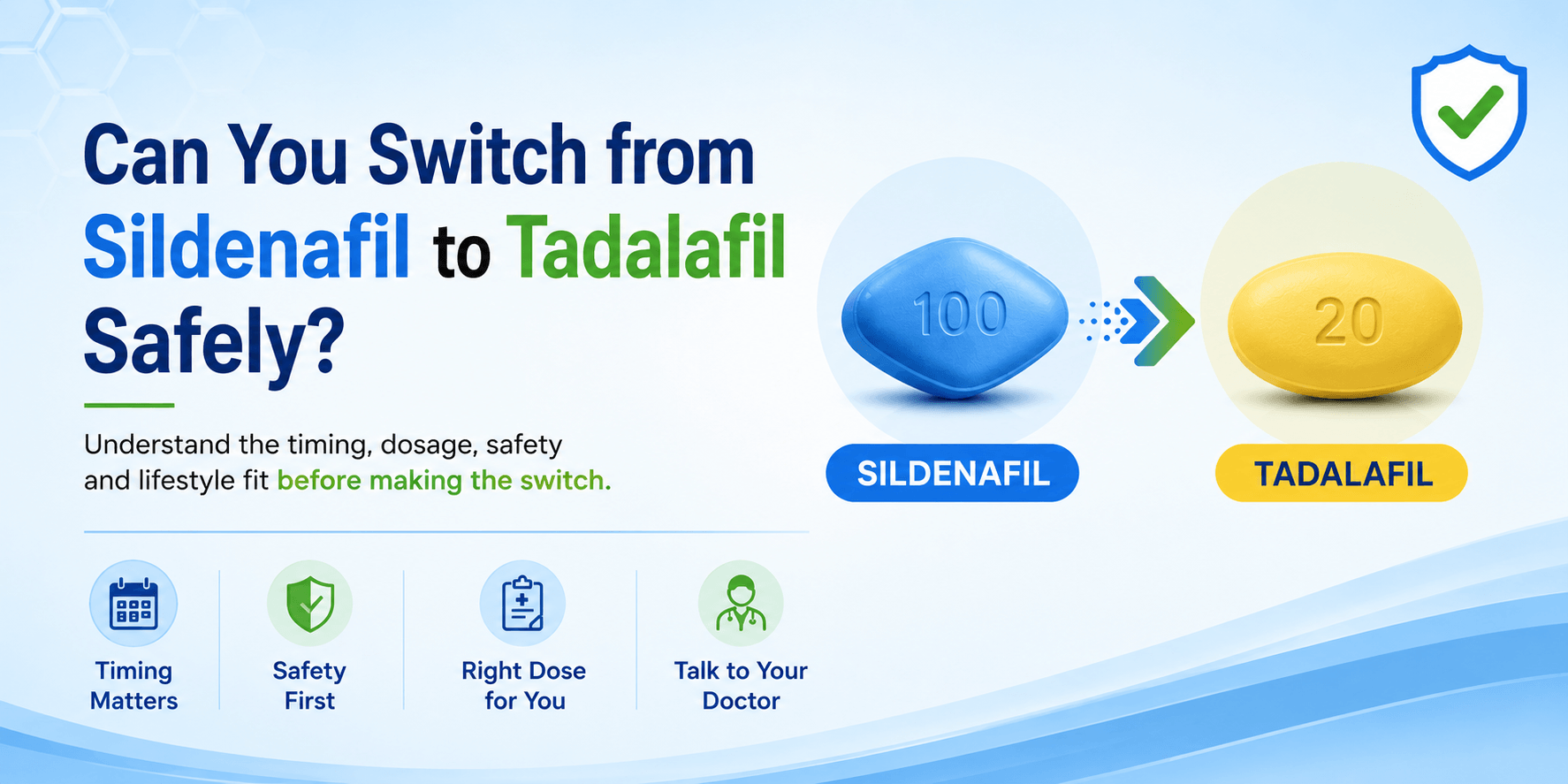
7. What’s the difference between sildenafil and tadalafil?
They both do the exact same heavy lifting, but they fit completely different lifestyles:
- Sildenafil (Generic Viagra): You take it about 30 to 60 minutes before you need it, and it stays active for roughly 4 to 6 hours. It’s the classic choice if you like to plan things out.
- Tadalafil (Generic Cialis): This one also kicks in quickly, but it stays in your system for up to 36 hours. Guys love it because it takes the pressure off the clock and allows for way more spontaneity.
8. Can stress alone cause ED, even if I’m physically healthy?
Without a doubt. Arousal starts entirely between your ears. If your brain is totally swamped with work stress, money worries, anxiety, or relationship tension, it sends a red alert to your body that shuts down the physical response. In fact, psychological factors are the number one cause of ED in guys under forty.
9. When should I see a doctor about ED?
If it happens once or twice, try not to sweat it—that is completely normal and happens to every guy at some point. But if the issue sticks around for more than a few weeks, or starts becoming a frequent anxiety, it’s time to chat with a professional. Your body might be trying to tell you something, since ED can sometimes be an early warning sign for things like high blood pressure, diabetes, or a hormonal imbalance.
10. Where can I purchase safe ED medications?
You can buy the medicines which are safe for ED on a licensed and legitimate online pharmacies such as GenPharmarx as they offer authentic and FDA approved generic medications with discreet shipping.
More Blogs