

What is Copy-Paste Wellness ?
Written By - Liora Malven
on June 6, 2026
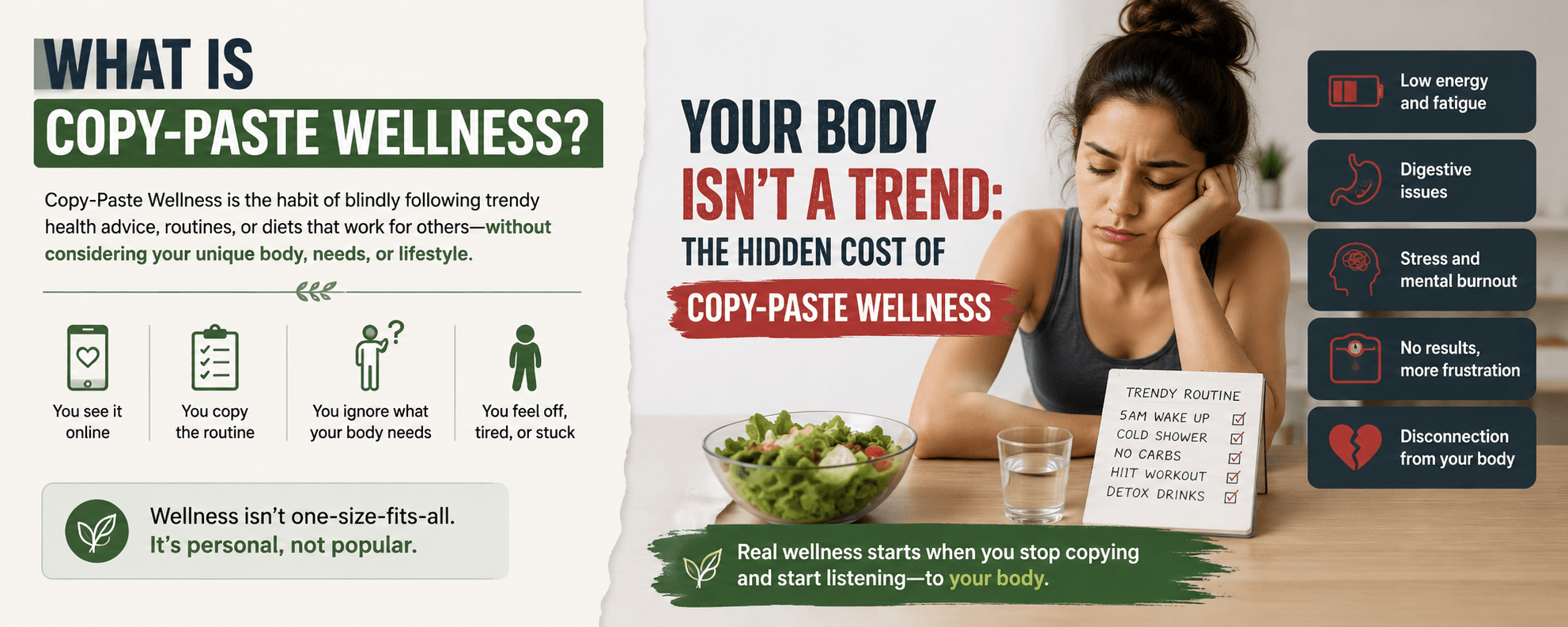
You’ve seen it happen. One morning you’re scrolling through your feed with a cup of coffee, and by lunchtime you’ve convinced yourself that ice baths, 16-hour fasts, sea moss gel, mouth tape, and a carnivore diet are the missing pieces of your life. By dinner, you’ve added three new supplements to your cart and blocked out 5 AM for a workout your knees will absolutely protest tomorrow. Welcome to the era of copy-paste wellness, where health advice spreads faster than a sneeze in a yoga class, and where your unique body is expected to respond exactly like the person filming the reel. The problem isn’t that wellness content exists. The problem is that you’re being handed a one-size-fits-all blueprint for something as deeply personal as your biology. Your genetics, your medications, your hormones, your sleep debt, your stress levels, and even your gut bacteria are wildly different from the influencer demonstrating their “miracle morning.” When you copy their routine, you’re not adopting wellness. You’re adopting their wellness. And that distinction can quietly cost you energy, money, mental peace, and sometimes your long-term health. This article isn’t here to shame trends or scare you off cold plunges. It’s here to remind you that your body deserves a strategy built around you, not around an algorithm. Let us learn why the personalized wellness is one of the smartest health investments that you will ever make and how you can escape the copy-paste culture.
The Rise of Copy-Paste Health Culture
There’s something oddly comforting about being told exactly what to eat, when to sleep, which supplement to swallow, and how long to plunge into freezing water. It removes the burden of thinking, and in a world that already demands too much of your attention, outsourcing your health decisions to a charismatic stranger online feels almost like self-care. This is the reason why copy-paste wellness has burst into a global culture. You scroll, you save, you screenshot, and before you know it, you’re following a routine designed for someone whose lifestyle, age, income, body type, and medical history look nothing like yours. Influencers aren’t villains here, but they aren’t doctors either. Most are sharing what worked for them, packaged in a 30-second clip that conveniently leaves out their genetics, their personal trainer, their nutritionist, their photographer, and the three trends they quietly abandoned last month. The algorithm rewards confidence, not accuracy, which means the loudest voices often drown out the most evidence-based ones. You end up adopting habits without context, swallowing supplements without blood work, and chasing aesthetics instead of actual health markers. The result is a strange kind of wellness fatigue, where you’re doing “everything right” and still feel exhausted, bloated, anxious, or stuck. Copy-paste wellness thrives because it feels like community, but real community in health looks like personalized guidance, not synchronized routines. Your body isn’t a trend to be participated in. It’s a living system that responds to inputs based on its own rules. The first step toward genuine wellness is recognizing that following the crowd online rarely leads to feeling better in your own skin. You deserve a routine designed for the human you actually are, not the avatar you scroll past.
When Good Wellness Advice Goes Wrong ?
Here’s the uncomfortable truth nobody puts in a viral caption: even genuinely good wellness advice can become genuinely harmful when applied to the wrong body. Intermittent fasting is a perfect example. For some people, it stabilizes energy and supports metabolic health, but if you’re managing diabetes, taking blood sugar medications, or struggling with disordered eating patterns, skipping meals can send your glucose levels and hormones into chaos. The keto diet has helped certain individuals, yet for someone with thyroid imbalances, gallbladder issues, or elevated cholesterol, slashing carbs and loading up on saturated fats can quietly worsen the very conditions they’re trying to improve. Cold plunges look thrilling on camera, but if you have heart disease, uncontrolled blood pressure, or arrhythmia, that shock to your nervous system isn’t a bio hack, it’s a medical risk. Supplements deserve their own warning label. Just because something is sold over the counter doesn’t mean it’s harmless for your specific chemistry. Ashwagandha can interact with thyroid medications. Turmeric can thin your blood if you’re already on anticoagulants. Even something as innocent-looking as magnesium can cause digestive distress at the wrong dose. And let’s talk about those intense workout regimens being marketed as “discipline.” HIIT classes, two-a-days, and extreme strength programs can absolutely build resilience, but for those with adrenal fatigue, autoimmune conditions, joint issues, or perimenopausal hormone shifts, that level of intensity often backfires into burnout, inflammation, and injury. The trend itself isn’t the enemy. The lack of personalization is. When wellness advice ignores your medications, conditions, age, and lab work, it stops being wellness and starts being a gamble. You’re not broken for reacting badly to something that works for millions. You’re simply not built the same, and that’s exactly the point.
Your Health Blueprint Is Different
Think about how bizarre it would be to walk into a pharmacy, hand over a stranger’s prescription, and expect it to make you feel better. It’s a wild thought, right? Yet, we do the exact same thing every time we copy and paste someone else’s viral wellness routine into our own lives.
Your body isn’t a carbon copy; it’s a completely unique ecosystem. What makes a social media influencer feel radiant might leave you feeling totally wiped out. Real well-being means listening to your own biology, not the internet trends.
For starters, age changes how we function. The workout and diet that fueled you at twenty can totally exhaust you at forty-five when hormones and metabolism shift. Genetics play a massive role, too, quietly deciding how you handle everything from morning caffeine to carbs. It’s the reason your friend thrives on raw veggies while they leave you feeling foggy and bloated.
Your daily reality matters, too. A night-shift nurse cannot follow the same morning routine as a remote worker living in a quiet suburb. We also have to talk about medications. Common prescriptions for blood pressure, thyroid issues, or even birth control interact deeply with foods and supplements in ways generic plans completely ignore.
The same goes for hidden health conditions like IBS, PCOS, or thyroid imbalances, which rewrite the rules of what is safe and smart for your body. And honestly? You cannot come out of the chronic sleep deprivation. Without rest, your immunity and mood will tank, no matter how many supplements you take.
Your personal blueprint isn’t a limitation; it’s your roadmap. When you stop fighting your body and start working with it, wellness stops feeling like a chore. It becomes about alignment, energy, and finally feeling good in your own skin.
The Hidden Warnings That Your Body Does Not Accept Trend
Your body is remarkably honest. The real problem is that most of us have learned to tune it out. We’ve been told to push through the discomfort, double down on our efforts, or blindly “trust the process.” But when a popular wellness trend clashes with your unique biology, your body doesn’t just sit there. It tries to warn you long before a major issue shows up.
Fatigue is usually the first whisper. This isn’t the satisfying, cozy tiredness you feel after a busy day. It’s that heavy, deep-in-your-bones exhaustion that no amount of coffee or weekend naps can fix. If a new lifestyle shift leaves you feeling totally wiped out for weeks, that isn’t a sign of personal weakness. It’s valuable data.
Your gut will also speak up. Sudden bloating, heartburn, or unpredictable bathroom trips are major red flags. They usually mean your digestive system is panicking under extreme diets, a mountain of new supplements, or fasting windows your body simply wasn’t designed to handle.
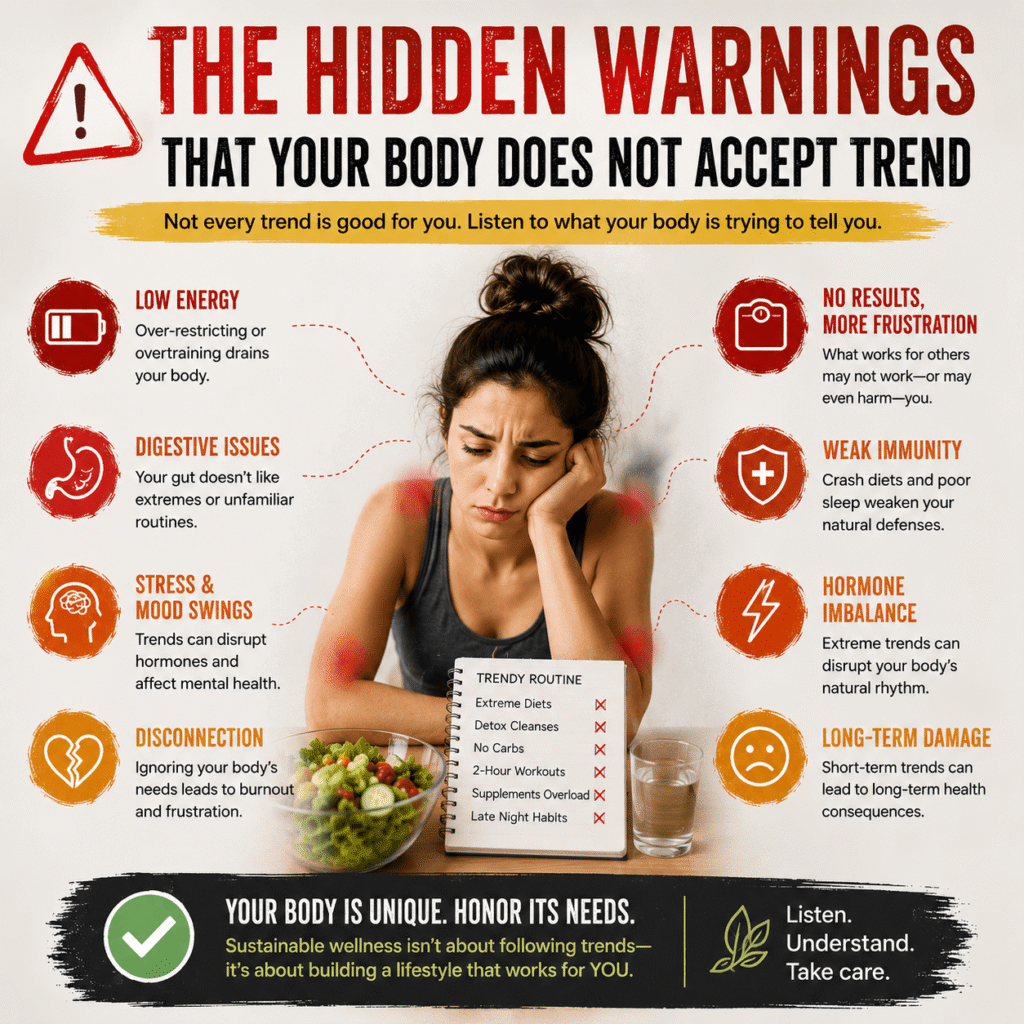
Pay attention to your nights, too. If you’re suddenly tossing and turning, waking up at 3 AM with a racing heart, or dragging yourself out of bed after eight hours of sleep, your stress hormones are likely out of whack. This happens all the time when over training or under eating gets disguised as “health.”
Then there are the quieter signs, like mood shifts and physical changes. Brittle nails, hair shedding, brain fog, sudden irritability, or that shaky, hungry feeling in the afternoon usually point to blood sugar crashes and nutritional gaps.
None of this means you are failing at being healthy. It just means your body is trying to have a conversation with you. Your job isn’t to ignore the warnings and force your way through. Your job is to listen, make adjustments, and choose a path that actually makes you feel good.
Your Wellness Routine
Escaping the trap of copy-paste wellness doesn’t require you to become a hardcore biohacker, hire a team of expensive specialists, or spend a small fortune on fancy lab tests. It honestly just takes a simple shift in mindset: you have to build your habits from the inside out, rather than trying to force external trends onto your life.
It starts with balanced nutrition that reflects your actual reality, not a curated, picture-perfect grocery haul. Aim for real meals built around protein, fibre, healthy fats, and colorful plants, but tweak them to fit your unique activity level, medical needs, and the foods you actually love. Food is meant to fuel and energize you, not punish you.
Next, prioritize preventive screenings, because guessing is never a smart health strategy. Simple annual blood work—checking your blood pressure, cholesterol, thyroid, and vitamin levels—gives you the actual data map your body is operating on.
Medication management is another non-negotiable pillar that generic advice completely ignores. If you take prescriptions, your wellness habits must work with them, not against them. Always chat with a professional before throwing a handful of trendy supplements into your daily routine.
Exercise shouldn’t feel like a punishment. Whether it’s walking, swimming, dancing, or lifting weights, the best workout is simply the one you will actually do without dreading it.
Finally, stress control is the secret ingredient that makes everything else work. Whether it’s deep breathing, time in nature, therapy, or setting firm boundaries, protecting your nervous system keeps chronic stress from quietly undermining your hard work. This is real, preventive wellness—and it’s built to last.
From Wellness Trends to Wellness Intelligence
The wellness industry isn’t slowing down, and honestly, you don’t need it to. Let the trends keep coming and the influencers keep filming. The real shift isn’t about blocking out the noise—it’s about upgrading your filters. It’s time to trade wellness impulse for wellness intelligence.
Wellness intelligence means pausing to ask a few honest questions before jumping on the next viral habit: Who was this advice built for? Is there real science behind it, or just good marketing?
Asking these questions changes everything. You stop being a passive consumer of trends and become the active architect of your own health.
This is where having a trusted anchor matters. Platforms like GenPharmaRx help bridge the massive gap between internet hype and evidence-based medicine. Whether you are trying to figure out if a new supplement will dangerously interact with your current prescription, looking for safer ways to manage cholesterol, or trying to understand what preventive steps actually matter for your age, having reliable guidance changes the game.
You stop guessing and start strategizing. Instead of reacting to an algorithm, you start responding to your own body’s data. Most importantly, you stop comparing your health to strangers online and start measuring it against your previous self—the only comparison that actually matters.
The future of your health isn’t about following the loudest voice in the room; it’s about becoming the most informed voice in your own life. Trends will always come and go, but a personal strategy built on science, data, and trusted guidance is the kind of foundation that quietly carries you through every season.
Frequently Asked Questions
What exactly is copy-paste wellness, and why is it considered risky?
Copy Paste Wellness is when you walk to a pharmacy grabbing a prescription from a stranger and expect that it will cure. It sounds totally wild when you put it that way, right? We follow a certain trend everyday when we scroll a trendy supplement stack or any diet and adopt it.
The risk is simple: your body isn’t a trend template; it’s a completely unique ecosystem. A high-intensity diet or workout protocol that leaves a twenty-something influencer feeling radiant might leave a forty-five-year-old navigating shifting hormones and high stress completely running on empty. If you are planning to manage chronic health issues, then take daily medications or adopt the different lifestyle. Forcing someone else trend will damage your health.
How is personalized wellness different from following a popular health trend?
The biggest difference comes down to who is actually in the driver’s seat. A trend starts with a stranger on the internet and demands that you warp your entire life, budget, and daily schedule to fit their rigid rules. It completely relies on strict conformity, which is exactly why it almost always leads straight to burnout, major nutrient deficiencies, or worsened physical symptoms.
Personalized wellness completely flips that script. It starts entirely with you—your unique bloodwork, your daily schedule, your medications, and your personal energy goals. Instead of forcing you to bend to a strict online philosophy, a personalized approach adapts and evolves alongside your actual life.
Can I follow intermittent fasting or keto if I have diabetes or thyroid issues?
Honestly, it is highly risky to jump into either of these without professional medical guidance. Both intermittent fasting and the ketogenic diet cause massive, rapid shifts in your blood sugar, metabolic markers, and hormone levels.
For some people, these tools can work beautifully when they are carefully monitored. But if you are already dealing with thyroid imbalances or diabetes, extreme fasting windows or cutting out major food groups can cause severe blood sugar crashes, tank your energy levels, and completely disrupt your metabolic stability. Always have a quick chat with your doctor or pharmacist before making any drastic dietary shifts if you have a chronic condition.
Are supplements safe just because they’re sold over the counter?
This is easily one of the biggest and most dangerous myths circulating in the wellness world today. Just because a powder, vitamin, or herbal gummy doesn’t require a prescription doesn’t mean it acts like water in your system.
Many trendy supplements contain powerful, active plant compounds that can interact incredibly poorly with prescription drugs. For instance, certain over-the-counter supplements can alter how your body absorbs blood pressure pills, thyroid hormones, or antidepressants, and some can even throw off your routine lab test results. If you are taking any regular medication, always verify safety with a healthcare professional before adding something new to your daily routine.
What are the early warning signs that a wellness trend isn’t working for my body?
Your body is remarkably honest; you just must listen to its whispers before they turn into screams. Other clear warning signs include sudden digestive issues like constant bloating or acid reflux, tossing and turning at night, or waking up at 3 AM with a racing heart. You might also notice quieter physical shifts like hair shedding, brittle nails, severe afternoon energy crashes, or unexpected mood swings and irritability. These aren’t signs that you are “failing” the trend—they are clear data points showing that the trend is failing you.
How often should I get preventive screenings as part of personalized wellness?
At a bare minimum, you should schedule a comprehensive annual check-up with your primary care doctor. Guessing is the exact opposite of a smart wellness strategy, and getting baseline blood work done gives you the actual, honest map of what is happening under the surface of your skin.
Depending on your age, your family history, and any conditions you are actively managing, you might need specific things checked a bit more frequently. This can include routine blood pressure checks, cholesterol panels, thyroid function tests, or blood sugar monitoring. Your healthcare provider can help you build a customized screening schedule so you are always responding to real data rather than online guesswork.
Is exercise intensity really that personal, or should everyone do HIIT?
Exercise intensity is incredibly personal, and the idea that everyone needs to push themselves through grueling High-Intensity Interval Training (HIIT) is entirely false. While HIIT can be a fantastic tool for some, it can be downright counterproductive for others.
If your body is already completely overwhelmed by chronic stress, autoimmune flares, joint pain, or hormonal imbalances, intense bursts of exercise can trigger a massive spike in cortisol that leaves you feeling utterly wiped out for days. The absolute best workout for your longevity is the one that respects your current recovery capacity and matches your physical reality—meaning it’s an activity you can do consistently three to five times a week without dreading it.
Can stress really impact my wellness routine that much?
Absolutely. You can eat a perfect diet and lift weights every single day, but you simply cannot out-hydrate or out-exercise a completely fried nervous system. Chronic stress releases a steady stream of hormones that actively disrupt your digestion, impair your sleep quality, lower your immunity, and alter how your body processes nutrients and stores fat.
Unmanaged stress acts as a direct emergency brake on all your healthy habits. That is why building genuine stress-management tools—like deep breathing, therapy, spending quiet time in nature, or setting healthy boundaries—is just as critical to your physical wellness as the food on your plate.
More Blogs