

Can Your Wearable Health Trackers Detect Bedroom Problems?
Written By - Tarian Voss
on July 1, 2026
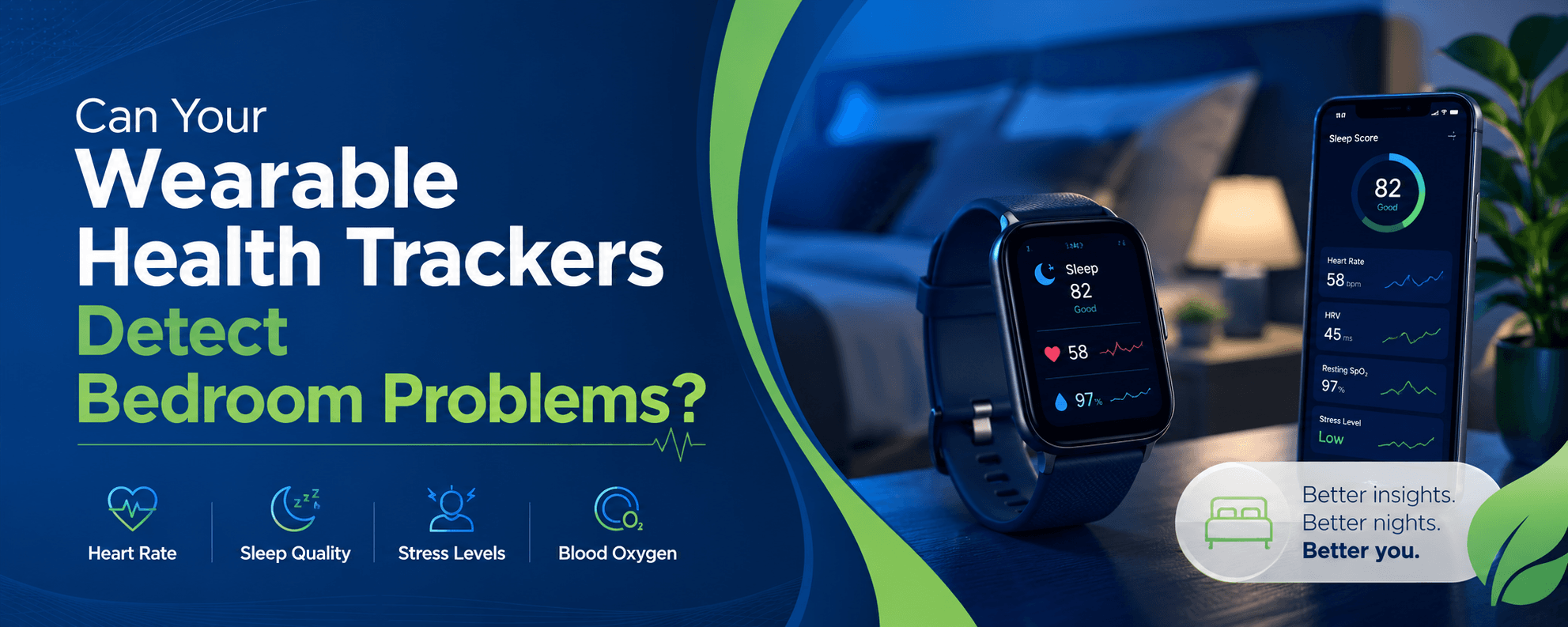
You strap it on every morning without thinking twice. It counts your steps, nudges you to stand, applauds your sleep score, and occasionally scolds you for skipping leg day. But here’s a question you probably haven’t asked your shiny little wrist companion: could it actually be hinting at what’s happening (or not happening) in your bedroom?
It sounds wild, almost like a plot twist in a sci-fi rom-com. Yet the science behind wearable health trackers is catching up faster than most men realize. Those tiny sensors hugging your wrist are quietly collecting clues about your cardiovascular health, stress patterns, and hormonal rhythm—all of which play starring roles in your sexual performance. So, before you brush off that “elevated resting heart rate” notification, you might want to lean in. Your watch could be whispering something your body hasn’t said out loud yet.
1. Your Wrist May Know Before You Do
Let’s be honest—most guys treat their smartwatch like a glorified pedometer with a fancy face. But underneath that sleek display lies a surprisingly sophisticated mini-clinic. Modern wearable health trackers monitor your resting heart rate, heart rate variability (HRV), sleep stages, stress levels, blood oxygen saturation (SpO2), and daily activity—and each of these metrics tells a quiet story about your overall vitality, including what’s happening below the belt.
Take resting heart rate, for instance. If yours has crept up over the past few months without explanation, it could signal cardiovascular strain, poor recovery, or chronic stress—three sneaky saboteurs of healthy erections. Heart rate variability, the gap between each heartbeat, is even more telling. A consistently low HRV often points to an overworked nervous system, which directly impacts testosterone production and arousal response. Then there’s sleep. If your watch keeps showing fragmented deep sleep or low REM cycles, your testosterone isn’t getting the nightly boost it desperately needs—because most of that hormone gets manufactured while you’re snoring peacefully.
Blood oxygen levels matter too. Dips during sleep can hint at sleep apnea, a condition strongly linked to erectile dysfunction symptoms in men over 35. Add elevated stress readings and sluggish activity levels into the mix, and you’ve got a digital fingerprint of declining sexual wellness. The fascinating part? Your watch doesn’t shout these warnings—it murmurs them through trends, graphs, and gentle nudges. The men who pay attention often catch problems early, while those who swipe away notifications miss the chance to act. Your wrist genuinely might know before you do—you just have to start listening.
2. The Blood Flow Connection Nobody Talks About
Here’s a truth bomb nobody really discusses at the gym: erections are essentially a circulation event. When blood flow falters, performance falters. And the same arteries that fuel your manhood also feed your heart, brain, and kidneys. So, when something starts going sideways in the bedroom, it’s rarely “just stress” or “just age”—it’s often your vascular system waving a red flag from a mile away.
Poor circulation is the silent villain behind most erectile dysfunction symptoms. The penile arteries are smaller than coronary arteries, meaning plaque buildup, inflammation, or stiffening shows up there first—sometimes years before a heart attack or stroke would ever be diagnosed. Doctors now consider ED an early warning sign of cardiovascular disease, not just a romantic inconvenience. Conditions like type 2 diabetes wreck the tiny blood vessels and nerves required for arousal, while high blood pressure thickens artery walls and reduces the blood volume that can rush in when it matters most. Even borderline cholesterol levels can quietly chip away at endothelial function—the lining of your blood vessels responsible for that on-demand expansion.
This is where wearable health trackers earn their keep. By logging your blood pressure trends, oxygen saturation, daily activity, and even passive cardiovascular fitness scores like VO2 max, your smartwatch builds a longitudinal picture your annual physical simply can’t. A steady decline in cardio fitness, combined with a creeping resting heart rate and reduced step count, may quietly mirror what’s happening with blood circulation and ED. The brilliant thing about catching it through data is timing—you can intervene with diet, exercise, and medical guidance long before bedroom struggles become bedroom dread. Your watch isn’t just tracking fitness; it’s tracking your future love life, one heartbeat at a time.
3. Can AI Predict Sexual Wellness?
Artificial intelligence has already learned to predict heart attacks, detect atrial fibrillation, and flag early-stage diabetes—so the obvious next question is: can it predict sexual wellness too? The answer, based on emerging research, is a cautious but exciting “we’re getting there.” AI-powered algorithms inside modern wearable health trackers are now crunching billions of data points from millions of users, looking for subtle patterns the human eye would never catch.
Machine learning models thrive on what scientists call digital biomarkers—measurable signals like HRV trends, sleep architecture, breathing rate variability, and micro-changes in skin temperature. Researchers at institutions like Stanford and the Mayo Clinic have already shown that AI can spot illness days before symptoms appear, just by reading wearable data. Apply that same logic to men’s health, and you start to see the potential. Subtle shifts in nighttime testosterone-linked metrics, recovery scores, and stress reactivity could one day predict declining libido or early erectile dysfunction symptoms with surprising accuracy. Some startups are already prototyping AI dashboards that combine smartwatch data with mood logs, hormone tests, and lifestyle inputs to give men personalized risk scores for sexual wellness decline.
That said, let’s keep the hype grounded. AI isn’t replacing your urologist anytime soon, and no algorithm can diagnose erectile dysfunction from your wrist alone. What it can do is highlight patterns worth discussing with a doctor—a nudge that says, “Hey, your recovery scores have been tanking for three weeks, your HRV is dropping, and your sleep quality is shot. Maybe schedule a check-up.” That’s the magic of predictive medicine: it turns reactive healthcare into proactive self-awareness. The future of sexual wellness might not start in a clinic—it might start with a friendly buzz on your wrist suggesting it’s time to pay attention before things get awkward.
Learn about the hidden causes of erectile dysfunction that tech can detect early.
4. Work Stress Shows Up on Your Watch—and in Your Bedroom
Let’s talk about the elephant in the office: stress. You feel it in your jaw, your shoulders, your inbox—but you might not realize it’s also marching straight into your bedroom and slamming the door. Chronic work stress is one of the most underrated saboteurs of male sexual performance, and unlike a hangover or a cold, it builds quietly over months until suddenly nothing feels quite right anymore.
Here’s the biology in plain English. When you’re stuck in back-to-back meetings, skipping lunch, and answering emails at 11 PM, your body pumps out cortisol—the stress hormone. Cortisol is brilliant in short bursts (think running from a bear), but when it stays elevated for weeks, it suppresses testosterone production, the very hormone responsible for libido, energy, and erection quality. At the same time, poor sleep tanks your recovery, your HRV nosedives, and inflammation creeps up. The result? Lower desire, weaker erections, and a frustrating sense that your spark just… vanished. Your wearable health tracker sees all of it. It logs the late-night screen time, the restless tossing, the spike in resting heart rate during Monday morning meetings, and the gradual decline in your readiness score.

So, what do you do about it? Start small but stay consistent. Aim for seven to nine hours of quality sleep, and let your watch confirm you’re hitting deep and REM stages. Build in 30 minutes of brisk movement daily—even walking counts, especially if it lowers your stress readings. Practice box breathing or guided meditation for ten minutes a day; many smartwatches have this built in. Cut back on late-night caffeine, hydrate properly, and protect at least one screen-free hour before bed. These aren’t woo-woo wellness tips—they’re measurable interventions your watch can verify, and your bedroom will thank you for them within weeks.
5. When Lifestyle Improvements Aren’t Enough- Wearable Health Trackers
Now let’s get real for a moment. Sometimes you do everything right—you sleep like a king, eat clean, exercise religiously, and meditate like a monk—and yet the bedroom problems persist. That doesn’t mean you’ve failed. It means it’s time to stop relying solely on your smartwatch and start a conversation with a qualified doctor. Wearable health trackers are phenomenal at flagging trends, but they can’t examine you, run blood work, or rule out underlying conditions.
You should consider booking a medical evaluation if you notice persistent erection difficulties for more than a few weeks, reduced morning erections, dropping libido despite a healthy lifestyle, premature ejaculation that’s affecting your confidence, or any combination of these along with fatigue, mood changes, or weight gain. These can be signs of hormonal imbalance, vascular issues, diabetes, thyroid dysfunction, or simply medication side effects—things only proper diagnostic testing can uncover. A proper doctor will look at the wearable data as well as the lab results which will build your complete picture and not just guess.
In some cases, after thorough evaluation, men diagnosed with both erectile dysfunction and premature ejaculation may be prescribed medications such as Super P Force—a combination therapy containing sildenafil and dapoxetine—under strict medical supervision. It’s important to understand that Super P Force is meant to complement, not replace, the treatment of underlying causes like cardiovascular disease, hormonal issues, or chronic stress. It works with the lifestyle improvements and does not override. Think as if it is a supportive tool as it helps to restore the confidence. On the other hand, you and your doctor address the root cause revealed by your wearable data and the tests by clinics. The goal is not just a quick fix but also to sustainable return for feeling yourself again. So, treat your smartwatch as the messenger, your lifestyle as the foundation, and professional medical guidance as the trusted hand that brings everything together responsibly.
6. The Future: Your Watch Could Become Your First Men’s Health Coach
Imagine waking up to a notification that doesn’t just say “Good morning, you slept seven hours” but instead nudges you with something like, “Your recovery is trending down, testosterone-linked markers look low this week—here’s what to do today.” That future isn’t decades away. It’s already being prototypes in research labs and tech hubs around the world, and it’s going to redefine how men approach sexual wellness.
The next generation of wearable health trackers will lean heavily into personalized medicine, learning your unique baselines instead of comparing you to generic averages. Combined with remote healthcare platforms, your watch could one day sync directly with your physician’s dashboard, allowing for continuous monitoring rather than once-a-year checkups.
Imagine that the telehealth consultants which are triggered automatically, your metric drift automatically or even AI -driven coaching which adjusts your daily routine is based on real time biometric feedback. Preventive health will stop being a buzzword and start being the default mode of care. And because erectile dysfunction symptoms are often early indicators of bigger health storms brewing, earlier diagnosis through wearable could literally save lives—not just love lives.

So, what should you actually do right now ? Check your trends weekly, not just your daily scores. Share concerning patterns with your doctor—print them, screenshot them, bring them to appointments. Move more, sleep better, manage stress intentionally, and let the data confirm your progress. You also need to stay curious about the new features such as blood pressure tracking and ECG and AI- driven insights which roll out. Most importantly, don’t ignore the quiet signals your wrist is sending. Bedroom problems rarely appear overnight; they build slowly, often broadcasting warnings through metrics you scroll past every day. The men who pay attention now will be the ones thriving—physically, emotionally, and intimately—a decade from now.
Frequently Asked Questions (FAQ)
Can my watch tell if I have ED?
Not explicitly. Your watch won’t flash an emergency alert, but it is a fantastic early warning system. It tracks dropping heart rate variability (HRV), terrible sleep, and high stress—telltale signs that usually pop up long before things stall out in the bedroom.
What metrics matter?
You need to focus on the resting heart rate, daily stress scores and REM sleep with HRV. These numbers help you give a direct look at the blood flow and hormone levels with nervous systems. These are the exact pillars you give a direct look at your blood flow and nervous system with hormone levels.
Is heart rate really connected to sex?
Absolutely. Getting and keeping an erection relies entirely on healthy blood flow. If your resting heart rate is consistently sky-high, your heart is working too hard. What strains your cardiovascular system will inevitably strain your sex life.
Can bad sleep ruin my game?
Yes, and fast. Your body pumps out the majority of its testosterone while you are knocked out in deep sleep. If your watch is showing you are constantly turning and tossing then there is an immediate dive at your T levels and mood.
How does stress wreck performance?
High stress floods your body with cortisol, the “fight-or-flight” hormone. Cortisol actively blocks testosterone and kills arousal. If your stress scores are chronically in the red, your brain prioritizes survival over romance.
Can AI predict future bedroom issues?
It’s getting close. AI is great at spotting tiny, long-term health trends you’d normally miss. Think of it less like a robotic diagnosis and more like a smart nudge from a buddy telling you it might be time for a checkup.
What is Super P Force?
When lifestyle changes aren’t doing the trick, medicine can help. Super P Force is a prescription tablet that tackles both erectile dysfunction and premature ejaculation at the same time using two active ingredients (sildenafil and dapoxetine). Because it’s powerful, you need a doctor’s green light first.
More Blogs