

How a Sedentary Lifestyle Is Quietly Wrecking Men’s Sexual Health ?
Written By - Cade Harrington
on June 26, 2026
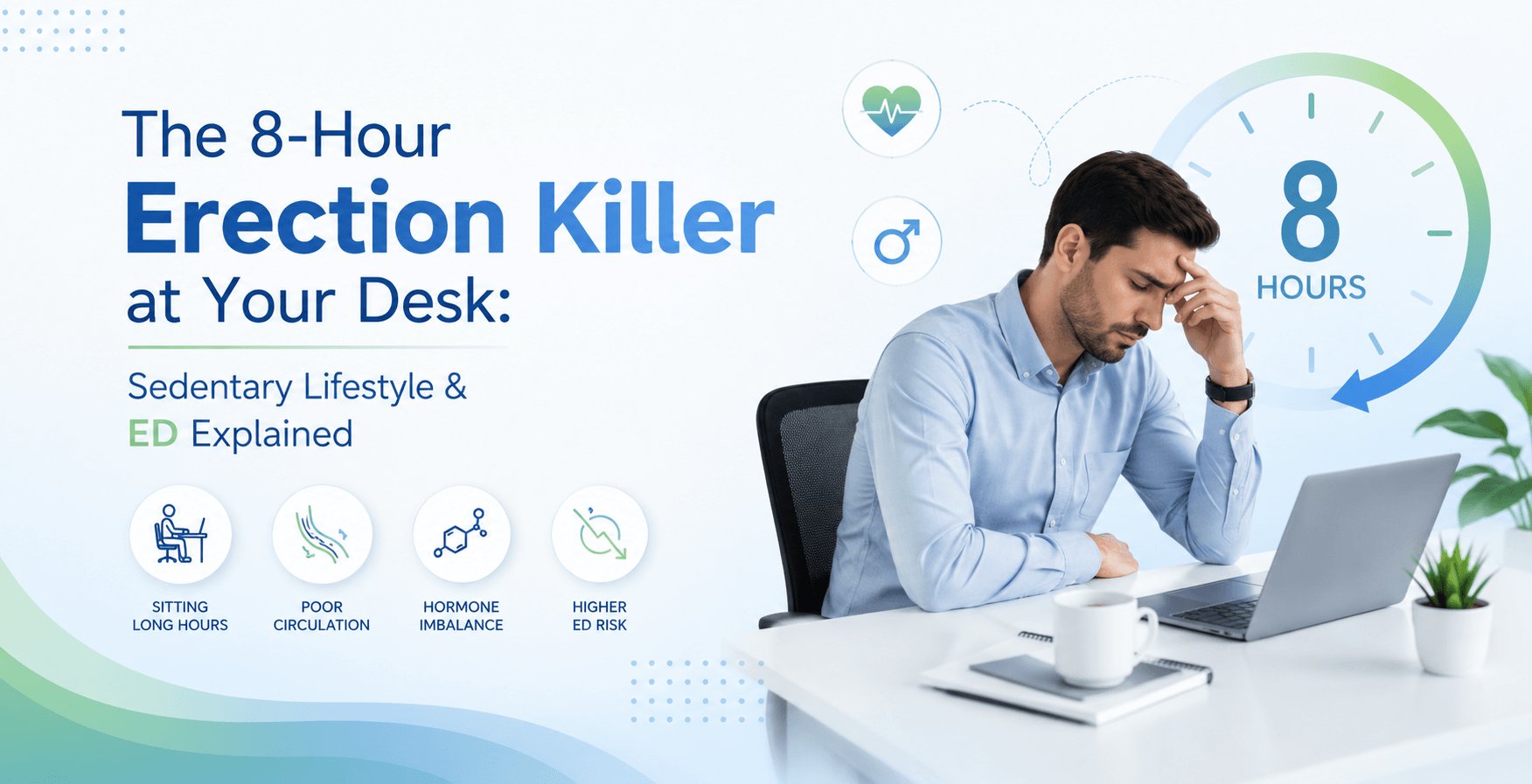
The 8-Hour Erection Killer at Your Desk: How a Sedentary Lifestyle Is Quietly Wrecking Men’s Sexual Health
Your office chair is probably the most committed relationship you’ve had this year. You spend more time with it than with your partner, your dog, and possibly your own reflection. It supports you through deadlines, awkward Zoom calls, and that third cup of coffee you swore you wouldn’t drink. But here’s the part nobody mentions during on boarding: that cozy 9-to-5 routine could be quietly sabotaging what happens — or rather, what doesn’t happen — in your bedroom.
If you’re a guy between 30 and 55 clocking 8+ hours behind a desk, this might feel a little too personal. That’s good. It means you’re paying attention. Because the link between a sedentary lifestyle and ED isn’t some fringe internet theory — it’s something doctors, urologists, and cardiologists have been quietly warning about for years. The longer you sit, the harder your body has to fight to keep your sexual health intact. And spoiler alert: most desk jobs aren’t designed with your circulation, your hormones, or your love life in mind.
So before you blame stress, age, or that one weird week of bad sleep, let’s talk about the real villain hiding under your desk — and what you can actually do about it without quitting your job or buying a $3,000 standing desk.
Why Your Chair May Be Sabotaging Blood Flow ?
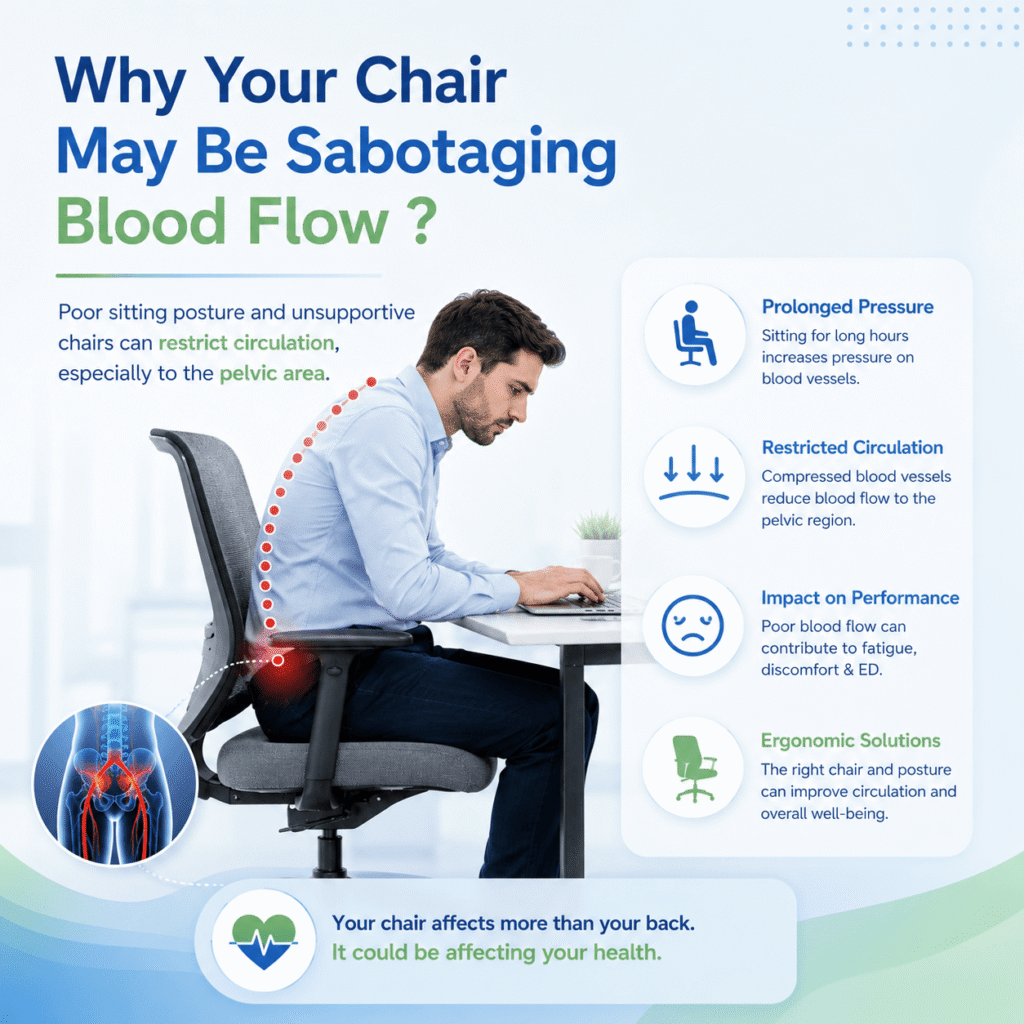
You probably don’t think of your office chair as a villain. It’s soft, it swivels, and it has those little lumbar bumps that pretend to care about your spine. But every hour you stay glued to it, your circulatory system is throwing a quiet tantrum — and your pelvic region is taking the biggest hit. When you sit for long stretches, blood flow to your lower body slows down dramatically. Your pelvic arteries — the same ones responsible for delivering oxygen-rich blood to the penis during arousal — get compressed under your body weight. Imagine stepping on a garden hose for eight hours and then wondering why the sprinkler isn’t working. That’s essentially what’s happening below your belt.
Here’s where it gets more uncomfortable. The endothelial cells lining your blood vessels rely on regular movement to produce nitric oxide — the same molecule that makes erections possible in the first place. Less movement means less nitric oxide, which means weaker, less reliable erections over time. Prolonged sitting also encourages plaque buildup in your arteries, raises your blood pressure, and contributes to insulin resistance. All three are direct contributors to vascular erectile dysfunction. You don’t need to be overweight or out of shape for this to happen — even lean, “healthy-looking” office workers can quietly develop circulatory issues that show up first in the bedroom.
And here’s the kicker: erectile tissue is incredibly sensitive to circulation changes. In fact, ED is often the first warning sign of larger cardiovascular issues, sometimes appearing 3 to 5 years before a heart problem is diagnosed. So if your chair is squeezing your pelvic blood flow daily, your body is essentially running a slow-motion stress test on your vascular system. The good news? Blood vessels are remarkably forgiving — if you start moving more, they bounce back faster than you’d expect. But first, you have to admit that yes, your beloved ergonomic throne might be the problem.
The “Zoom-to-Bedroom” Connection Nobody Talks About
You’ve sat through six back-to-back meetings, answered 47 Slack messages, and stared at a glowing rectangle for nine hours straight. Then you come home, your partner gives you that look, and suddenly your body acts like it’s never seen a romantic situation in its life. Sound familiar? Welcome to what we’re calling the “Zoom-to-Bedroom” problem — and it’s far more common than guys want to admit. The truth is, mental fatigue and sexual performance are deeply, frustratingly linked. Your brain is technically your largest sex organ, and when it’s fried from screen overload, the rest of your body simply refuses to cooperate.
The villain here is cortisol — your body’s main stress hormone. Every Zoom call you dread, every deadline that creeps up, every passive-aggressive email triggers a small cortisol spike. Stack those spikes across an 8-hour workday and your cortisol levels stay chronically elevated. This is bad news for your sex life because cortisol directly suppresses testosterone production. Lower testosterone means lower libido, slower arousal, and reduced erection quality. Add in blue light exposure that messes with your melatonin, poor sleep that wrecks your hormonal balance, and the mental exhaustion of context-switching all day, and you’ve basically built the perfect storm for office workers’ sexual health to nosedive.
Also learn how screen time effects the health and causes erectile dysfunction.
There’s also the issue of psychological availability. After staring at a screen all day, your brain craves stillness, not stimulation. So even when the moment is right, your mind is still mentally drafting that follow-up email. Performance anxiety creeps in, you overthink, and the next thing you know, you’re caught in a cycle where stress causes ED, and ED causes more stress. Breaking this loop usually requires more than willpower — it requires intentional decompression: walking after work, ditching screens an hour before bed, breath work, and yes, sometimes a conversation with a doctor. Because pretending your job isn’t affecting your sex life is like pretending your coffee isn’t keeping you up at night.
Are You Experiencing Early Signs of Sitting-Related ED?
Here’s the part most guys skip — the warning signs. Erectile dysfunction rarely shows up overnight. It usually whispers before it shouts, and most men dismiss those whispers as “just a bad night” or “I’m tired this week.” But your body is actually a pretty honest narrator, especially when it comes to sexual health. If you’re noticing changes that feel small but persistent, it’s worth paying attention. Some of the earliest red flags include weaker morning erections, taking longer than usual to get aroused, losing firmness midway, or needing more direct stimulation than you used to. These aren’t dramatic symptoms — and that’s exactly why they get ignored.
You might also notice subtle non-sexual signs that hint at vascular trouble. Cold hands and feet, numbness in your legs after long sitting sessions, lower energy, or a general feeling of “meh” about intimacy can all be early indicators. A drop in libido that you can’t quite explain — not because you’re not attracted to your partner, but because your body just isn’t generating that spark — is often tied directly to sedentary habits and the hormonal chaos they create. Many men in their 30s and 40s assume this is just “getting older,” when really, it’s their lifestyle catching up to them. Aging doesn’t flip a switch overnight; lifestyle does.
The tricky part is that these symptoms tend to fluctuate. You’ll have a great week, then a flat one, then a great one again — which makes it easy to convince yourself nothing’s wrong. But if you’re tracking a pattern over months, especially alongside long work hours and minimal physical activity, that’s your cue to take it seriously. Catching sitting-related erectile dysfunction early is a massive advantage. The earlier you address it, the more likely it is that lifestyle changes alone can reverse it — without needing long-term medication. Ignore it, and you’re letting a fixable problem evolve into a much bigger one. Your body is telling you something.
The 60-Second Desk Fix for Better Circulation
Good news: you don’t need to quit your job, buy a Peloton, or move to a forest cabin to fix this. Some of the most effective interventions take less than a minute and can be done without anyone in the office noticing. The golden rule? Move something every 30 minutes. Not a full workout — just enough movement to remind your body that you’re still alive in there. Stand up, roll your shoulders, do 10 calf raises, march in place, or take a quick lap to refill your water. These tiny movements stimulate blood flow, reactivate dormant muscles, and give your pelvic region a much-needed break from the constant pressure.
A few desk-friendly moves work especially well for circulation. Seated pelvic tilts — gently tilting your hips forward and back while seated — help wake up the muscles around your prostate and pelvic floor. Standing hip flexor stretches counter the shortening that happens from prolonged sitting and reopen the blood vessels feeding your groin. Kegel exercises (yes, men should do them too) strengthen the same muscles involved in maintaining erections and improving ejaculatory control. Throw in a few body-weights squats every couple of hours, and you’ve essentially built a stealth circulation routine into your workday. None of this requires gym clothes, sweat, or a single coworker noticing.
If you can swing it, alternate between sitting and standing using a height-adjustable desk. Walking meetings — even phone calls taken on a slow stroll — can dramatically reduce your daily “sitting load.” Aim for 7,000 to 10,000 steps daily, not as a fitness goal, but as a circulatory hygiene minimum. And here’s a bonus tip: hydrate aggressively. Dehydration thickens your blood, slows circulation, and makes everything worse. Keeping a big water bottle on your desk forces hydration and forces bathroom breaks — which means more standing, more walking, and more blood flow. Simple, almost embarrassingly easy, and yet most guys still won’t do it. Don’t be most guys.
The Hidden Trio: Weight Gain, Diabetes, and ED
Here’s where the sedentary lifestyle story gets a lot more serious. Sitting all day doesn’t just affect blood flow — it slowly rewires your entire metabolism. The longer you sit, the less your muscles contract, and the less efficiently your body processes glucose. All this will lead to insulin resistance which the type 2 diabetes.
And diabetes, as any urologist will tell you, is one of the most aggressive contributors to erectile dysfunction in modern men. In fact, men with diabetes are up to three times more likely to experience ED, often a decade earlier than non-diabetic peers. That’s not a coincidence — it’s biology calling in its debt.
Weight gain compounds the problem. Excess belly fat isn’t just cosmetic — it’s hormonally active tissue that converts testosterone into estrogen, lowers free testosterone levels, and increases systemic inflammation. All three are bad news for erections. On top of that, carrying extra weight strains your cardiovascular system, raises your blood pressure, and worsens cholesterol levels. Every one of these factors narrows the blood vessels feeding the penis. So while your job description says “desk worker,” your body is quietly working a much harder shift — managing inflammation, sugar spikes, and hormonal disruption it was never designed to handle on a daily basis.
And then there’s the emotional layer. Weight gain affects body image, which affects confidence, which affects performance. It’s a domino effect that often makes men withdraw from intimacy altogether, deepening the cycle. The encouraging part is that this trio — weight gain, diabetes, and ED — responds remarkably well to lifestyle change. Losing even 5–10% of body weight can improve testosterone levels, insulin sensitivity, and erectile function. Adding 30 minutes of daily walking, cutting back on ultra-processed foods, and getting 7+ hours of sleep can transform your sexual health within a few months. You don’t have to overhaul your life — you just have to stop letting your chair run it.
Do you know, Can High Cholesterol Also be the reason for Erectile Dysfunction ?
Can Your Sexual Health Recover After Years at a Desk?
Now for the question you’ve actually been wondering this whole time: Is it too late? Short answer — almost certainly not. The human body is annoyingly resilient, even after years of bad habits. Blood vessels can heal, testosterone levels can rebound, and erectile function can absolutely improve with the right combination of movement, nutrition, sleep, and medical support. Studies have consistently shown that men who shift from sedentary to moderately active lifestyles see noticeable improvements in erectile function within 8 to 12 weeks. That’s less than one financial quarter — and arguably a better ROI than anything in your portfolio.
Recovery usually works best when approached on multiple fronts. Start with the basics: daily movement, strength training two to three times a week, a Mediterranean-style diet rich in healthy fats and leafy greens, and prioritizing sleep like it’s a billable hour. From there, get a proper medical evaluation. A licensed physician can check your testosterone, blood sugar, lipid panel, and cardiovascular markers — all of which influence sexual performance. For some men, medical treatment is an important bridge while lifestyle changes take effect, and modern options are far more discreet and effective than they were a decade ago. Prescription medications like sildenafil (Viagra) and tadalafil (Cialis) can restore confidence and circulation while you work on the root causes.
This is where prevention-focused healthcare really shines. Platforms like GenPharmaRx make it easier than ever to consult with licensed professionals, get evaluated, and access trusted treatments without awkward in-person appointments. Whether you’re noticing early symptoms or you’ve been ignoring the issue for years, the worst thing you can do is nothing. Your sex life isn’t a side quest — it’s a core indicator of your overall health. Tackle it like you’d tackle any other performance issue at work: with data, action, and a willingness to ask for help. Your future self (and your partner) will thank you.
Frequently Asked Questions (FAQ)
Can sitting too much really cause erectile dysfunction?
Look, let’s be real: sitting all day does way more than just leave you with a stiff back. When you’re parked in a chair for hours, you’re literally compressing your pelvic region and cutting off crucial blood flow. It also stalls the production of nitric oxide—the exact chemical your body needs to get and stay hard. It’s becoming a massive roadblock for younger and middle-aged guys.
How many hours of sitting is considered harmful for sexual health?
The danger zone hits right around 6 to 8 hours a day. If you’re clearing that benchmark without giving your body regular breaks to move around, you’re significantly bumping up your risk for ED, not to mention throwing a wrench into your overall heart and metabolic health.
Can a standing desk help prevent ED?
It’s not a magic bullet that will instantly fix everything, but it definitely helps. The trick isn’t standing all day either—it’s about alternating. Mixing up your routine between sitting and standing takes the constant pressure off your pelvis and keeps your circulation moving like it’s supposed to.
How quickly can lifestyle changes improve erectile function?
The good news is your body bounces back surprisingly fast. If you commit to moving more, eating a bit cleaner, fixing your sleep, and sitting less, most guys start noticing a real difference in about 8 to 12 weeks. The longer you stick with these habits, the better the results get.
Are office workers really at higher risk for ED than active workers?
Yeah, they are. The data is pretty clear on this: guys with sedentary desk jobs deal with ED at much higher rates than guys who are on their feet moving for a living. It’s simple mechanics—an active body keeps blood flowing, while a chair slows everything down.
What’s the best desk exercise for better circulation?
You don’t need a full workout at your cubicle. Just set a timer to stand up every 30 minutes. Do 10 quick body weight squats, some calf raises, or just pace around for two minutes. If you want to target the specific muscles that control erections, throw in some pelvic tilts and Kegels during the day.
Does stress from work really affect erections?
100%. Chronic job stress pumps your body full of cortisol, which actively tanks your testosterone and kills your libido. When your brain is completely fried from work, your body won’t cooperate. Mental fatigue is honestly one of the most slept-on causes of ED in guys under 50.
Should I see a doctor or try lifestyle changes first?
There’s no reason you can’t do both. Start moving more and fixing your daily habits today. But if you’ve been trying that for a few weeks and things still aren’t firing right, go see a doctor. Getting checked out early rules out bigger health issues and gets you answers faster.
Are ED medications safe for long-term use?
As long as you’re getting them prescribed and monitored by a real doctor, FDA-approved options like sildenafil (Viagra) or tadalafil (Cialis) are perfectly safe and highly effective for long-term use in healthy guys.
Can young men in their 30s really get ED from desk jobs?
They absolutely can, and it’s skyrocketing right now. The modern cocktail of sitting for 9 hours a day, high-stress targets, terrible sleep, and constant screen burnout has created a perfect storm. Guys in their 30s are dealing with ED at rates we’ve never seen before.
Your chair isn’t evil — but unchecked, it’s not exactly your wing man either. A sedentary lifestyle and ED are more connected than most men realize, and the earlier you take action, the easier the fix. Move more, stress less, eat smarter, sleep deeper, and don’t be afraid to talk to a professional. Your performance at work matters — but your performance everywhere else matters just as much.
Ready to take charge of your sexual health? Book a confidential consultation with GenPharmaRx today and get back to feeling like yourself again.
More Blogs